Documented Cleaning Service for Food Processing Plants
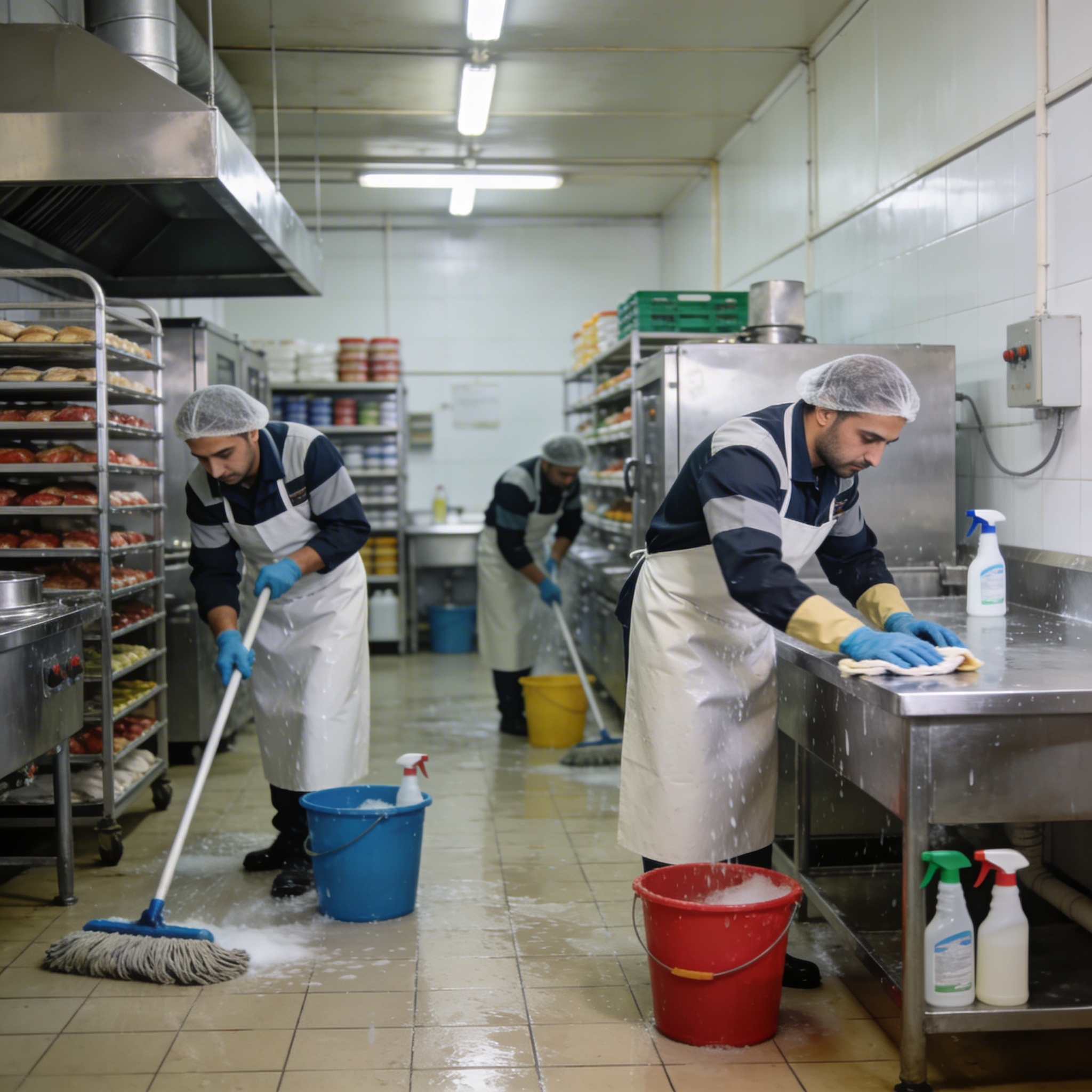
We provide scheduled, documented cleaning for food production areas in Baku and Sumgayit, performed during nights or weekends to avoid stopping the line. Plant managers pay for this because a failed hygiene audit can halt exports and inconsistent cleaning risks expensive product spoilage.
Operator fit: You should be a hands-on manager who is comfortable visiting industrial sites at night and building trust with plant supervisors.
Decision snapshot
Investment
AZN 3,650
Monthly profit
AZN 7,750
Payback
4 months
Customer type
B2B
Tech needed
No tech
Sector
Industrial services
Quick Decision
Export facilities to Russia and the EU now require written cleaning logs for inspectors, which most in-house teams cannot produce.
General cleaners often miss food-contact surfaces like conveyor belts and mixing tanks, where residue causes mold and bacteria.
Clients will frequently ask for 'small extras' outside the food zone, like cleaning office windows, which consumes crew time but is not billable under the contract.
What You Are Selling
A recurring, documented cleaning service for food processing facilities that prevents contamination shutdowns and ensures they pass hygiene audits.
Who this is for: Target operations managers or quality control officers at food processing plants in Baku and Sumgayit, such as bottling, dairy, or meat facilities, running multi-shift operations with export exposure.
- Export facilities to Russia and the EU now require written cleaning logs for inspectors, which most in-house teams cannot produce.
- General cleaners often miss food-contact surfaces like conveyor belts and mixing tanks, where residue causes mold and bacteria.
Financial Detail
| Item | Estimated cost |
|---|---|
| Cleaning Equipment & Supplies | AZN 1,000 |
| Business Registration & Permits | AZN 400 |
| Safety Gear & Uniforms | AZN 500 |
| Initial Marketing & Client Acquisition | AZN 650 |
| Vehicle Fuel & Initial Transport | AZN 300 |
| Working Capital Reserve | AZN 800 |
| Month 1 | Month 2 | Month 3 | Month 4 | Month 5 | Month 6 | Month 7 | Month 8 | Month 9 | Month 10 | Month 11 | Month 12 | |
|---|---|---|---|---|---|---|---|---|---|---|---|---|
| Revenue | AZN 0 | AZN 0 | AZN 3,750 | AZN 5,000 | AZN 6,250 | AZN 7,500 | AZN 8,750 | AZN 9,000 | AZN 9,000 | AZN 9,000 | AZN 9,000 | AZN 9,000 |
| Costs | AZN 1,250 | AZN 1,250 | AZN 1,250 | AZN 1,250 | AZN 1,250 | AZN 1,250 | AZN 1,250 | AZN 1,250 | AZN 1,250 | AZN 1,250 | AZN 1,250 | AZN 1,250 |
| Net profit | -AZN 1,250 | -AZN 1,250 | AZN 2,500 | AZN 3,750 | AZN 5,000 | AZN 6,250 | AZN 7,500 | AZN 7,750 | AZN 7,750 | AZN 7,750 | AZN 7,750 | AZN 7,750 |
| Investment recovery | AZN -4,900 | AZN -6,150 | AZN -3,650 | AZN 100 | AZN 5,100 | AZN 11,350 | AZN 18,850 | AZN 26,600 | AZN 34,350 | AZN 42,100 | AZN 49,850 | AZN 57,600 |
Net profit = monthly revenue minus operating costs. Investment recovery = estimated running cash position after deducting the full startup investment, calculated using monthly net profit midpoints. Turns positive when startup investment is fully recovered.
Figures are indicative midpoint estimates. Actual results depend on execution, location, and market conditions.
How This Business Wins
Price monthly contracts per covered production zone and shift, with payment contingent on signed cleaning logs to guarantee audit-readiness for export-focused plants.
- We de-risk the first sale with a paid 2-4 week pilot, offering a bounded scope for one specific production zone and shift, detailed in a written scope document.
- A three-month contract for nightly cleaning of one high-risk zone, such as the primary packaging line or a cold storage room.
- Includes a documented deep clean of that starter zone and provision of a bound logbook for supervisor sign-off after each service.
- Charge a fixed monthly fee per defined production zone (e.g., packaging hall, cold storage room) to simplify budgeting for plant managers.
- Base pricing on the shift schedule (nightly, weekend, or pre-audit intensive) with a minimum contract of three months to ensure stability.
- Tie final monthly payment to the client supervisor's sign-off on completed digital cleaning logs for each service visit.
- Define the 'food production zone' precisely in the contract, excluding offices, locker rooms, and external grounds as out-of-scope.
- Require a 25% deposit for any add-hoc deep clean or emergency service requested outside the scheduled contract hours.
- Implement a formal change-order process for any cleaning tasks beyond the originally mapped surfaces and equipment listed in the service annex.
Customer and Buying Logic
Target operations managers or quality control officers at food processing plants in Baku and Sumgayit, such as bottling, dairy, or meat facilities, running multi-shift operations with export exposure. Ideal accounts struggle with inconsistent in-house cleaning or weak contractor performance that risks audit failures and product spoilage, and where plant leadership owns hygiene compliance.
- Economic buyer: Operations Manager at a juice or dairy plant who approves the monthly contract to prevent costly export halts from failed hygiene audits.
- Operational buyer: Production Supervisor who schedules the nightly or weekend cleaning shifts to avoid stopping the production line.
- Technical approver: Quality Control Officer who reviews and accepts the documented cleaning logs required for EU and Russian export inspections.
- Failed hygiene audit or inspection due to missing documented cleaning logs.
- Customer complaints about product spoilage or contamination linked to poor sanitation.
- Chronic missed shifts or unreliability from current informal cleaning contractors.
Most plants use their own low-paid production staff to clean after shifts, which is inconsistent and poorly documented.
We win because we guarantee the documentation needed for audits and focus only on food-contact areas, which reduces their risk of spoilage.
How You Get First Customers
- Build account list from food processing plants in Baku, Sumqayit, and Absheron industrial clusters.
- Direct phone calls to plant Operations Manager or Quality Control Officer during shift change hours.
- WhatsApp follow-up with photos of similar facility work and the one-page scope checklist.
Source accounts from the Baku/Sumqayit industrial cluster list.
- Targeted phone outreach to operations/QA contacts from the clustered account list.
- WhatsApp used for follow-up, sharing before/after photos and the one-page scope document.
- On-site visits and walkthroughs with plant stakeholders to assess zones and agree on trial scope.
- Problem and impact: Failed hygiene audits cause costly export downtime and product spoilage risk.
- Bounded trial scope: Start with one high-risk zone or weekend shift line.
- SOP reporting: Daily cleaning logs with supervisor sign-off for accountability.
What You Need To Start
- Start by doing the first few cleaning jobs yourself with one helper before hiring a dedicated crew.
- Buy basic cleaning supplies (brushes, food-safe detergents) in bulk from local wholesalers only after securing the first contract.
- Use a simple notebook and phone camera for documentation initially; avoid expensive software until you have 5 steady clients.
- A standard business registration as a Limited Liability Company (Məhdud Məsuliyyətli Cəmiyyət) or individual entrepreneur (Fərdi Sahibkar).
- Basic liability insurance for service businesses, which is advisable when working on client property.
- Industrial-grade mops, brushes, and squeegees suitable for food-contact surfaces.
- A reliable vehicle, like a minivan, to transport equipment and a small crew.
- Food-safe cleaning chemicals and detergents from a reputable supplier.
- One trustworthy Crew Leader who can manage night shifts when you are not there.
- Two reliable Cleaners who can follow detailed procedures and work overnight.
- You need experience managing people and schedules, ideally in a service, logistics, or production environment.
- You must be comfortable with direct sales and negotiating contracts in person.
Risks
- Clients will frequently ask for 'small extras' outside the food zone, like cleaning office windows, which consumes crew time but is not billable under the contract.
- Finding and retaining reliable crew members for consistent night shifts in industrial areas is difficult and will likely require a pay premium over day rates.
- Seasonal processors, like those for fruits, may suspend service for months, creating unpredictable cash flow gaps unless you secure annual contracts or find complementary clients.
First 12 Months
- 1Personally visit 8-10 food plants in the Sumgayit and Baku industrial zones to see layouts and introduce yourself to the shift supervisor on duty.
- 2Prepare a one-page service sheet in Azerbaijani with three options: nightly production line clean, weekly deep clean of specific rooms, and pre-audit preparation service.
- 3Offer a one-time, paid deep clean of a high-risk area like their cold storage or packaging hall to demonstrate your method and the documentation you provide.
- 4Use the job report and supervisor sign-off from that first job to secure two 3-month contracts with other facilities before hiring your first full-time crew leader.
Final Verdict
This is an attractive opportunity with a clear pain point and contract-based revenue model. The key risk is scope creep from clients requesting non-food-zone cleaning, which can erode margins if not contractually managed.
You should be a hands-on manager who is comfortable visiting industrial sites at night and building trust with plant supervisors. You need to be organized enough to manage cleaning logs and reliable enough to show up every shift, even on weekends. Sales skill is important for the first contracts, but your reputation will depend entirely on consistent, high-quality execution.