Mobile Water Quality Service for Fish Farms
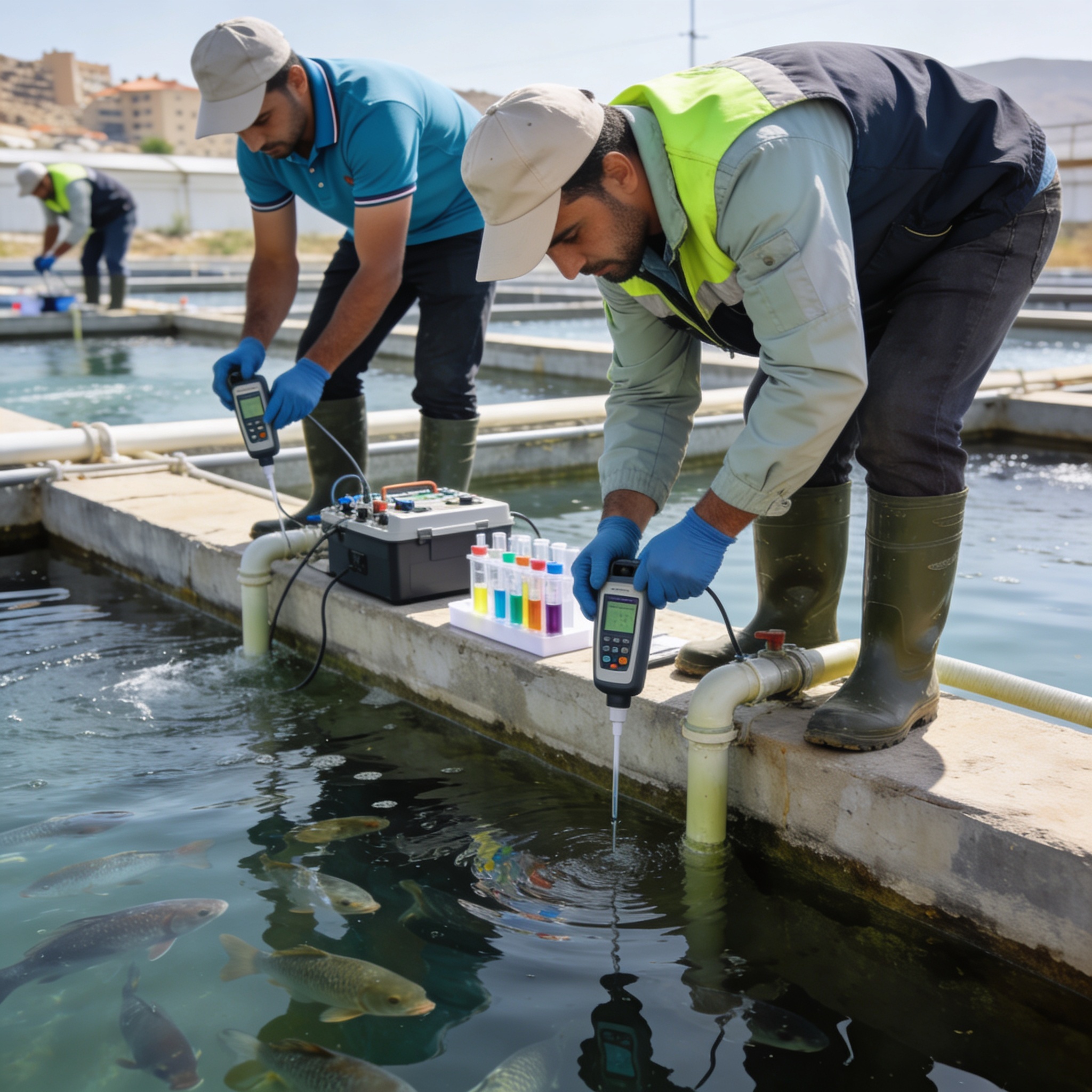
We sell scheduled visits to fish farms to test dissolved oxygen, pH, temperature, and flow rates, then calibrate their monitoring equipment and provide basic troubleshooting. Farmers pay because uncalibrated equipment leads to unexpected fish deaths and processors reject their harvest for failing water quality standards.
Operator fit: This suits someone with basic technical skills who is comfortable driving to rural areas and explaining equipment issues to farm managers.
Decision snapshot
Investment
AZN 52,500
Monthly profit
AZN 6,800
Payback
~13 months
Customer type
B2B
Tech needed
Low
Sector
Service
Quick Decision
Fish farms lose stock when dissolved oxygen meters drift but have no local technician to recalibrate them.
Processors in the Gakh-Zaqatala region reject deliveries that fail water quality tests, creating urgent compliance pressure.
Winter travel to remote farms around Tovuz and Gadabay can be difficult, delaying service visits and increasing vehicle costs.
What You Are Selling
A mobile service that visits fish farms to check and calibrate water monitoring equipment, preventing stock losses and helping farms meet export standards.
Who this is for: Small to medium fish farms and hatcheries in Azerbaijan, especially those without in-house technical teams, that face stock losses and export rejections due to uncalibrated water monitoring equipment.
- Fish farms lose stock when dissolved oxygen meters drift but have no local technician to recalibrate them.
- Processors in the Gakh-Zaqatala region reject deliveries that fail water quality tests, creating urgent compliance pressure.
Financial Detail
| Item | Estimated cost |
|---|---|
| Mobile Laboratory Vehicle & Equipment | AZN 25,000 |
| Water Testing Equipment & Calibration Tools | AZN 13,500 |
| Business Registration & Permits | AZN 2,500 |
| Initial Marketing & Client Acquisition | AZN 4,500 |
| Working Capital (3 months operating costs) | AZN 7,000 |
| Month 1 | Month 2 | Month 3 | Month 4 | Month 5 | Month 6 | Month 7 | Month 8 | Month 9 | Month 10 | Month 11 | Month 12 | |
|---|---|---|---|---|---|---|---|---|---|---|---|---|
| Revenue | AZN 0 | AZN 0 | AZN 3,000 | AZN 4,500 | AZN 6,000 | AZN 7,500 | AZN 8,000 | AZN 8,500 | AZN 9,000 | AZN 9,000 | AZN 9,000 | AZN 9,000 |
| Costs | AZN 2,200 | AZN 2,200 | AZN 2,200 | AZN 2,200 | AZN 2,200 | AZN 2,200 | AZN 2,200 | AZN 2,200 | AZN 2,200 | AZN 2,200 | AZN 2,200 | AZN 2,200 |
| Net profit | -AZN 2,200 | -AZN 2,200 | AZN 800 | AZN 2,300 | AZN 3,800 | AZN 5,300 | AZN 5,800 | AZN 6,300 | AZN 6,800 | AZN 6,800 | AZN 6,800 | AZN 6,800 |
| Investment recovery | AZN -54,700 | AZN -56,900 | AZN -56,100 | AZN -53,800 | AZN -50,000 | AZN -44,700 | AZN -38,900 | AZN -32,600 | AZN -25,800 | AZN -19,000 | AZN -12,200 | AZN -5,400 |
Net profit = monthly revenue minus operating costs. Investment recovery = estimated running cash position after deducting the full startup investment, calculated using monthly net profit midpoints. Turns positive when startup investment is fully recovered.
Figures are indicative midpoint estimates. Actual results depend on execution, location, and market conditions.
How This Business Wins
Price per metric ton of fish produced, with seasonal minimum-volume contracts and separate fees for emergency calls and recalibration, acting as a quality tollgate for export compliance.
- Close the first client on a limited, one-month trial covering two visits.
- First-season contract: calibration and checks for a single production block or pond.
- Bounded scope: includes two scheduled visits and one emergency call allowance.
- Charge per metric ton of fish produced, reflecting the value of export-grade compliance.
- Set seasonal minimum-volume contracts to ensure baseline revenue and commitment.
- Separate fees for emergency calls and spec-change recalibration to capture out-of-scope work.
- Require deposit for emergency calls to prevent unbilled urgent service.
- Define clear scope boundaries: calibration and basic diagnostics only; equipment upgrades are separate.
- Charge change-order fees for any recalibration due to farm spec changes mid-season.
Customer and Buying Logic
Small to medium fish farms and hatcheries in Azerbaijan, especially those without in-house technical teams, that face stock losses and export rejections due to uncalibrated water monitoring equipment. Primary targets are farms linked to nut processors and exporters experiencing grading rejections in the Gakh-Zaqatala trade corridor.
- Farm Owner/Manager: Cares about preventing sudden fish kills and securing repeat sales to their processor.
- Production Technician: Wants reliable equipment readings to avoid being blamed for water quality problems.
- Processor Procurement Officer: Cares that their supplier farms pass water tests to ensure their own export compliance.
- A farm loses a batch of fish due to low oxygen that their meter failed to detect.
- Their processor issues a formal warning or rejects a delivery due to out-of-spec water test results.
- Their existing meter supplier cannot send a technician for weeks when a calibration is needed.
Today, farm managers either ignore their equipment calibration, occasionally call a distant general technician from the city, or send water samples.
We win by being the only local specialist focused solely on keeping water monitoring equipment accurate, which directly protects the farmer's stock.
How You Get First Customers
- Visit the loading areas of fish processors in Gakh and Zaqatala during harvest season to identify which farms are delivering and ask managers about common rejection reasons.
- Contact the sales offices of companies that sell aquaculture equipment (like oxygen meters) in Baku and ask for introductions to farms that recently purchased monitoring gear.
- Attend local agricultural fairs in regions like Goychay and Ismayilli where fish farmers gather, and demonstrate a side-by-side calibration of a pH meter.
Source accounts by identifying fish farms through nut processors and exporters with grading rejection pain in the Gakh-Zaqatala trade flows.
- Direct visits to farms, starting with those visible from main roads in known aquaculture areas.
- Asking your first two clients for a direct introduction to one other farm they know.
- Leaving your service brochure with aquaculture feed and equipment suppliers in regional centers.
- Start by asking about their last processor delivery and if they've ever had quality feedback.
- Show a simple chart of how meter drift over time leads to incorrect farm management decisions.
- Present your calibrated meter next to theirs to demonstrate the current error.
What You Need To Start
- Capex discipline: Use a single, modularly equipped service van per region, with all tools and calibration kits standardized to minimize spare parts inventory and vehicle fleet size.
- Working capital discipline: Structure supplier terms to pay for consumables (e.g., sensor probes, reagents) 60 days post-invoice, aligning with the 30-day payment cycle from seasonal service contracts.
- Utilization discipline: Schedule routes algorithmically to cluster farm visits by geography and sensor type, maximizing billable service hours per van per day and minimizing idle travel time.
- A standard business registration as a sole trader or LLC.
- Vehicle registration and insurance suitable for commercial use on rural roads.
- A reliable, fuel-efficient vehicle for regional travel.
- A high-quality, portable dissolved oxygen meter and pH meter for field calibration.
- Calibration solutions, spare probes, basic hand tools, and protective cases.
- A laptop or tablet for generating simple reports on-site.
- The operator handles all technical visits and sales initially.
- A part-time administrator (can be family) to manage scheduling and invoicing from an office.
- Comfortable with basic mechanical and electrical concepts to troubleshoot sensors.
- A valid driver's license and experience driving in rural Azerbaijani regions.
- Patience and persistence to build relationships with farm managers over multiple visits.
Risks
- Winter travel to remote farms around Tovuz and Gadabay can be difficult, delaying service visits and increasing vehicle costs.
- If you cannot clearly prove that your service reduces processor rejections, farms will see it as an unnecessary cost rather than quality insurance.
- Some farms may try to copy your calibration process after one visit instead of signing a recurring contract.
First 12 Months
- 1First, visit 10-15 fish farms around Goygol and Shamkir to demonstrate a free water quality audit, showing them their current meter readings versus your calibrated equipment.
- 2Use the audit findings to propose a three-month service contract covering monthly calibration checks, with pricing based on their farm's annual production volume in tons.
- 3Convert the first two farms to paid contracts, then ask them for introductions to their fish processor buyers to understand the exact compliance requirements.
- 4Once you have processor relationships, offer a 'compliance package' to other farms that supply those processors, guaranteeing your service meets the processor's standards.
Final Verdict
This is attractive as a quality tollgate service that directly unlocks export compliance and secures repeat processor demand for fish farms. The key risk is geographic dispersion of farms eroding service route economics.
This suits someone with basic technical skills who is comfortable driving to rural areas and explaining equipment issues to farm managers. You need patience to build trust with farmers and the discipline to follow a consistent calibration routine. A background in agricultural equipment sales, farm management, or basic water testing is helpful but not required.