Sensor-Based Irrigation Retrofit Service for Greenhouses and Orchards
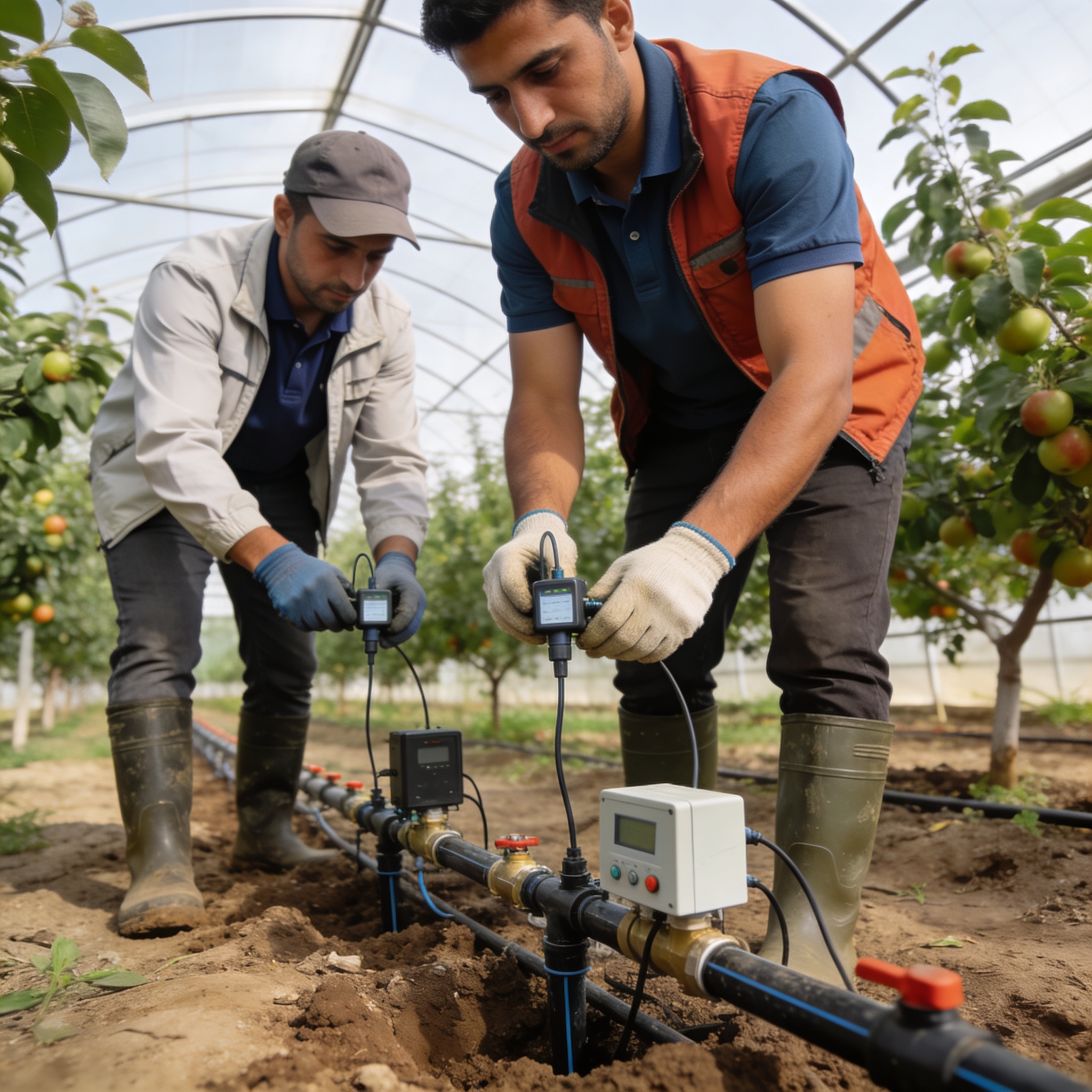
We install soil moisture sensors, pressure monitors, and simple controllers onto farms' existing drip and fertigation systems. Farmers pay because they're currently wasting money on over-watering, under-watering, and inconsistent fertilizer application that hurts yields.
Operator fit: This suits someone with basic technical skills who can install simple electrical and plumbing components.
Decision snapshot
Investment
AZN 83,500
Monthly profit
AZN 9,250
Payback
~14 months
Customer type
B2B
Tech needed
Medium
Sector
Service
Quick Decision
Farmers in Absheron and other regions manually operate irrigation systems, leading to inconsistent watering that stresses crops and wastes resources.
While drip systems are common, the monitoring and automation layer that turns them into precise tools is rarely available locally.
Farmers may doubt sensor accuracy until they see side-by-side comparisons on a local farm they know.
What You Are Selling
Retrofit existing farm irrigation systems with sensors and controls that reduce water and fertilizer waste, sold as a service with guaranteed savings.
Who this is for: Absheron-area greenhouse tomato and cucumber growers and orchard farms with existing drip irrigation systems, who are experiencing visible water and fertilizer waste costs and have a repeat purchasing cadence.
- Farmers in Absheron and other regions manually operate irrigation systems, leading to inconsistent watering that stresses crops and wastes resources.
- While drip systems are common, the monitoring and automation layer that turns them into precise tools is rarely available locally.
Financial Detail
| Item | Estimated cost |
|---|---|
| Sensor and control hardware inventory | AZN 27,500 |
| Installation tools and service vehicle | AZN 20,000 |
| Business registration and permits | AZN 9,000 |
| Initial marketing and client acquisition | AZN 11,000 |
| Office setup and software licenses | AZN 5,500 |
| Working capital for first 3 months | AZN 10,500 |
| Month 1 | Month 2 | Month 3 | Month 4 | Month 5 | Month 6 | Month 7 | Month 8 | Month 9 | Month 10 | Month 11 | Month 12 | |
|---|---|---|---|---|---|---|---|---|---|---|---|---|
| Revenue | AZN 0 | AZN 0 | AZN 6,500 | AZN 8,500 | AZN 10,000 | AZN 11,500 | AZN 12,000 | AZN 12,500 | AZN 12,500 | AZN 12,500 | AZN 12,500 | AZN 12,500 |
| Costs | AZN 3,250 | AZN 3,250 | AZN 3,250 | AZN 3,250 | AZN 3,250 | AZN 3,250 | AZN 3,250 | AZN 3,250 | AZN 3,250 | AZN 3,250 | AZN 3,250 | AZN 3,250 |
| Net profit | -AZN 3,250 | -AZN 3,250 | AZN 3,250 | AZN 5,250 | AZN 6,750 | AZN 8,250 | AZN 8,750 | AZN 9,250 | AZN 9,250 | AZN 9,250 | AZN 9,250 | AZN 9,250 |
| Investment recovery | AZN -86,750 | AZN -90,000 | AZN -86,750 | AZN -81,500 | AZN -74,750 | AZN -66,500 | AZN -57,750 | AZN -48,500 | AZN -39,250 | AZN -30,000 | AZN -20,750 | AZN -11,500 |
Net profit = monthly revenue minus operating costs. Investment recovery = estimated running cash position after deducting the full startup investment, calculated using monthly net profit midpoints. Turns positive when startup investment is fully recovered.
Figures are indicative midpoint estimates. Actual results depend on execution, location, and market conditions.
How This Business Wins
We price by the greenhouse or orchard block retrofit scope, with a recurring service fee for monitoring, anchoring the offer on guaranteed water and fertilizer savings.
- Offer to retrofit one greenhouse section or a small orchard zone at equipment cost only, with 3 months of service included.
- Bounded pilot: retrofit one greenhouse or a 0.5-hectare orchard block with full sensor suite and 3 months of service.
- Guarantee a minimum 15% reduction in water use for the pilot period or refund the service fee.
- Price per installed zone (e.g., one greenhouse or 1-hectare orchard block) covering sensors, controller, and commissioning.
- Add a fixed monthly service fee per zone for data monitoring, system checks, and adjustment recommendations.
- Require a minimum contract of one growing season for the service to ensure savings realization and stickiness.
- Define clear scope boundaries: price excludes repairs to existing mainlines, pumps, or major pipe replacements.
- Charge a daily rate for any on-farm waiting time due to farmer unavailability or unprepared site access.
- Implement change-order rules: any additions after sign-off incur a 20% premium and reschedule the timeline.
Customer and Buying Logic
Absheron-area greenhouse tomato and cucumber growers and orchard farms with existing drip irrigation systems, who are experiencing visible water and fertilizer waste costs and have a repeat purchasing cadence for operational improvements.
- Farm Owner: Cares about reducing water and fertilizer costs while maintaining or improving yields.
- Farm Manager: Wants to eliminate daily irrigation tasks and prevent crop stress from human error.
- Irrigation Technician: Seeks tools to diagnose system problems like clogged drippers or pressure drops.
- A visible crop yield drop in one section traced to inconsistent watering.
- Receiving a water bill that is unexpectedly high for the season.
- Losing plants to root rot from saturated soil that could have been prevented.
Farmers currently rely on manual timers or workers turning valves by hand based on experience, which often leads to over-watering on cool days.
We win by showing actual water savings data from the first month, not just promising future benefits, and by taking full responsibility for system.
How You Get First Customers
- Identify greenhouse clusters in Absheron by driving routes and noting operations with visible irrigation infrastructure and active crop cycles.
- Contact the farm operator or manager directly via phone, introduced through local agri-input dealers who supply seeds and fertilizer.
- Visit large vegetable farms during irrigation hours to observe manual system operation and discuss water cost pain points with the on-site supervisor.
Source accounts by driving Absheron greenhouse clusters.
- Direct farm visits in Absheron greenhouse clusters with a demonstration kit showing soil moisture readings.
- Referrals from agricultural equipment suppliers who sell drip systems but don't offer optimization.
- WhatsApp messaging to farm managers you meet at local agricultural events with before/after photos from pilot sites.
- Show side-by-side soil moisture data from their current manual schedule versus what the sensors recommend.
- Calculate their potential water and fertilizer savings based on local utility rates and fertilizer costs.
- Explain the installation process: 1-2 days per greenhouse with minimal disruption to their operations.
What You Need To Start
- Start with 5-10 basic sensor kits instead of stocking full inventory for large farms.
- Use a personal vehicle for farm visits initially rather than buying a dedicated service vehicle.
- Focus on Absheron region first to minimize travel time and fuel costs.
- Business registration for technical installation services.
- No specialized agricultural permits needed for retrofit work.
- Portable soil moisture sensor for demonstrations.
- Basic hand tools for irrigation system installation.
- Laptop or tablet for configuring controllers and showing data.
- One technician with plumbing/electrical skills for installations.
- Optional: part-time assistant for farm visits and demonstrations.
- Basic understanding of irrigation systems and agricultural practices.
- Comfort with simple technology setup and data interpretation.
- Patience to work through farmer skepticism with demonstrations.
Risks
- Farmers may doubt sensor accuracy until they see side-by-side comparisons on a local farm they know.
- Winter temperatures in Azerbaijan can freeze exposed irrigation lines and sensors if not properly insulated or drained.
- If you cannot clearly demonstrate water or fertilizer savings within the first growing season, farmers will not renew service contracts.
First 12 Months
- 1Identify 20-30 greenhouse tomato/cucumber growers in Absheron with visible irrigation issues like waterlogged soil or uneven plant growth.
- 2Visit 3-5 farms to demonstrate sensor readings versus their manual schedule, showing actual over-watering or dry spots.
- 3Install a complete sensor and controller retrofit on one greenhouse section for a first client, charging only for equipment with service included for 3 months.
- 4Use data from that first installation to show water savings of 15-30% when pitching similar farms nearby.
Final Verdict
Attractive if focused on Absheron greenhouse growers with a clear wedge of reducing water and fertilizer waste faster than their manual alternatives. Key risk is farmer skepticism requiring clear, localized pilot demonstrations.
This suits someone with basic technical skills who can install simple electrical and plumbing components. You need patience to work with farmers and show them data, not just sell equipment. Experience in agriculture, irrigation systems, or technical service is valuable but not required if you're willing to learn. You should have enough capital to buy initial sensor kits and a vehicle for farm visits.