Live Mud Crab Farm for Baku's Premium Restaurants
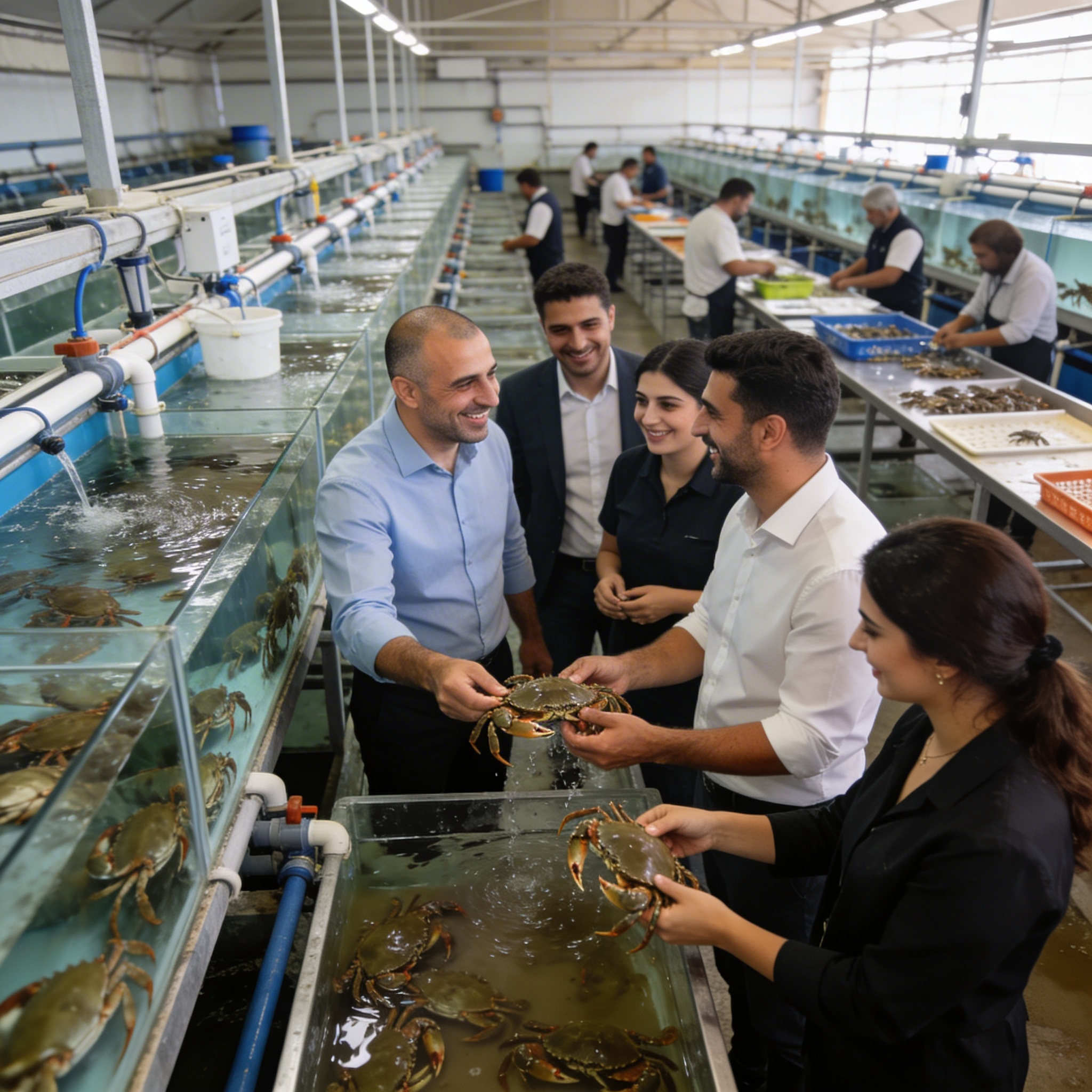
We farm live mud crabs in Azerbaijan and deliver them weekly to restaurants and export buyers. Chefs and exporters pay more because their current crab supply—from imports and fishermen—often arrives dead or is unavailable, which ruins dishes and breaks contracts.
Operator fit: This is for someone with practical hands-on ability, not just management skills.
Decision snapshot
Investment
AZN 43,000
Monthly profit
AZN 16,000
Payback
11 months
Customer type
B2B
Tech needed
Light tech
Sector
Agriculture
Quick Decision
High-end Baku restaurants build signature crab dishes but imported crabs frequently die in transit, wasting money and disrupting the kitchen.
Exporters to Georgia and Russia lose significant profit and damage client relationships when shipped crabs die due to long, poorly-handled journeys from distant sources.
The entire juvenile stock supply depends on one international hatchery; a customs delay or supplier issue stops new stock and halts farm growth.
What You Are Selling
A reliable, local source of live mud crabs for high-end restaurants and exporters who currently struggle with dead imports and seasonal supply.
Who this is for: The primary customer is the executive chef or owner of a high-end restaurant in Baku that already has crab dishes on its menu.
- High-end Baku restaurants build signature crab dishes but imported crabs frequently die in transit, wasting money and disrupting the kitchen.
- Exporters to Georgia and Russia lose significant profit and damage client relationships when shipped crabs die due to long, poorly-handled journeys from distant sources.
Financial Detail
| Item | Estimated cost |
|---|---|
| Aquaculture Pond Construction & Setup | AZN 17,500 |
| Initial Crab Stock & Breeding Equipment | AZN 10,000 |
| Water Filtration & Aeration Systems | AZN 7,500 |
| Business Registration & Environmental Permits | AZN 3,000 |
| Initial Working Capital (Feed, Utilities) | AZN 5,000 |
| Month 1 | Month 2 | Month 3 | Month 4 | Month 5 | Month 6 | Month 7 | Month 8 | Month 9 | Month 10 | Month 11 | Month 12 | |
|---|---|---|---|---|---|---|---|---|---|---|---|---|
| Revenue | AZN 0 | AZN 0 | AZN 0 | AZN 0 | AZN 0 | AZN 10,000 | AZN 14,000 | AZN 18,000 | AZN 20,000 | AZN 21,000 | AZN 21,000 | AZN 21,000 |
| Costs | AZN 5,000 | AZN 5,000 | AZN 5,000 | AZN 5,000 | AZN 5,000 | AZN 5,000 | AZN 5,000 | AZN 5,000 | AZN 5,000 | AZN 5,000 | AZN 5,000 | AZN 5,000 |
| Net profit | -AZN 5,000 | -AZN 5,000 | -AZN 5,000 | -AZN 5,000 | -AZN 5,000 | AZN 5,000 | AZN 9,000 | AZN 13,000 | AZN 15,000 | AZN 16,000 | AZN 16,000 | AZN 16,000 |
| Investment recovery | AZN -48,000 | AZN -53,000 | AZN -58,000 | AZN -63,000 | AZN -68,000 | AZN -63,000 | AZN -54,000 | AZN -41,000 | AZN -26,000 | AZN -10,000 | AZN 6,000 | AZN 22,000 |
Net profit = monthly revenue minus operating costs. Investment recovery = estimated running cash position after deducting the full startup investment, calculated using monthly net profit midpoints. Turns positive when startup investment is fully recovered.
Figures are indicative midpoint estimates. Actual results depend on execution, location, and market conditions.
How This Business Wins
Price per kilogram for live crabs under fixed-volume, 3-month contracts to guarantee revenue and match the premium for consistent, high-quality supply.
- Close the first 2-3 clients on a simple, one-time trial order of 5 kg of crabs.
- Offer a trial period: first two weekly deliveries at a 10% discount with a minimum 5kg commitment.
- Guarantee a specific size grade for the starter batch to meet restaurant plating standards.
- Charge a premium price per kilogram for live crabs, reflecting the value of guaranteed quality and availability.
- Set a minimum weekly volume commitment (e.g., 5-10kg) per client to ensure delivery efficiency and baseline revenue.
- Use 3-month fixed-price agreements to lock in clients and simplify forecasting, with price adjustments at renewal based on input costs.
- Require a 25% deposit for the first month's contracted volume upon signing to secure commitment.
- Define clear out-of-scope terms: last-minute order cancellations within 48 hours incur a 50% fee for the committed volume.
- Strictly limit size variations; orders requesting specific, non-standard sizes trigger a 15% premium.
Customer and Buying Logic
The primary customer is the executive chef or owner of a high-end restaurant in Baku that already has crab dishes on its menu. They serve 50+ meals per day, have been in business for at least two years, and are frustrated by the cost and inconsistency of their current imported or local crab supply.
- Executive Chef: Cares about consistent size, live arrival, and reliable weekly delivery to keep their signature dish on the menu without last-minute changes.
- Restaurant Owner: Focuses on total food cost, reducing waste from dead product, and securing a stable supply to maintain customer satisfaction and reviews.
- Export Manager: Needs a dependable local source to reduce long transport times, minimize mortality in transit, and fulfill larger export contracts profitably.
- A recent shipment of imported crabs arrived with over 30% dead, causing a kitchen crisis and wasted money.
- The seasonal local catch has ended, leaving the restaurant unable to offer its popular crab dish for months.
- An export order was rejected because too many crabs died during the long overland journey from the import source.
Buyers currently use a combination of imported live crabs, which are expensive and often arrive dead, and seasonal crabs from local fishermen, which.
We win by being the only local source that guarantees live delivery every week, eliminating the waste and menu disruption chefs hate, at a price.
How You Get First Customers
- Visit high-end restaurant districts in Baku, such as around Fountain Square or the Boulevard, during afternoon prep hours (2-4 PM) to ask for the chef.
- Get introductions to seafood wholesalers and export company managers through contacts at the local fish markets or food import/export associations.
- Use WhatsApp to follow up after in-person visits, sending short videos of the live crabs and delivery process to build credibility and urgency.
Source target accounts from Baku's premium hotel and seafood restaurant directories, focusing on executive chefs.
- Direct, in-person visits to restaurant kitchens during slow afternoon hours to meet the chef directly with a live sample.
- Referrals from initial pilot restaurant clients to other chefs in their network, facilitated by a thank-you discount on their next order.
- Building relationships with a few key seafood wholesalers who can introduce you to their restaurant clients looking for better crab supply.
- Start by asking if they've ever had problems with crabs arriving dead or not being available.
- Show them the live crabs you brought, emphasizing they were harvested that morning locally.
- Explain your weekly delivery guarantee and fixed pricing, which stops their cost from fluctuating.
What You Need To Start
- Lease pond infrastructure instead of buying land; focus on securing a good site with existing water access.
- Start with the minimum viable stock (500 juveniles) to supply the first 4-6 target clients, not a large pond meant for future scaling.
- Use a reliable used refrigerated vehicle for deliveries instead of a new one, and handle the first deliveries yourself to avoid a hired driver's cost.
- Business registration for aquaculture farming from the Ministry of Agriculture.
- Veterinary and sanitary-epidemiological permits for importing live juvenile crabs and selling live seafood.
- Leased pond site with brackish water supply, basic aeration pumps, and secure fencing.
- Insulated, oxygenated transport boxes and a reliable refrigerated vehicle for Baku deliveries.
- Water testing kits and a pond heater or plan for seasonal stocking pauses to manage winter temperatures.
- A farm hand for daily feeding, water monitoring, and basic pond maintenance.
- A delivery driver (can be the operator initially) who understands the careful handling required for live seafood.
- Practical experience in agriculture, animal husbandry, or fisheries is highly valuable.
- Must be comfortable with direct B2B sales, in-person visits, and building relationships with chefs and business owners.
Risks
- The entire juvenile stock supply depends on one international hatchery; a customs delay or supplier issue stops new stock and halts farm growth.
- Winter water temperatures in Azerbaijan can drop below the crabs' active range, slowing growth and increasing deaths unless heating is installed, adding cost.
- If a major restaurant client cancels a weekly order with short notice, you must sell those live crabs within 48 hours or they lose value and die.
First 12 Months
- 1Secure a lease on a pond site with access to clean, slightly salty water, and install basic aeration and secure fencing to protect the stock.
- 2Source and import the first batch of 500-700 juvenile crabs from a hatchery, completing all required veterinary checks and customs clearance paperwork.
- 3Set up a reliable delivery system in Baku using insulated, oxygenated boxes and a refrigerated vehicle for early-morning, same-day deliveries to kitchens.
- 4Visit 15-20 target restaurant chefs and export managers with live samples, aiming to secure 4-6 signed weekly supply contracts before the first crabs are harvest-ready.
Final Verdict
This is an attractive opportunity due to strong demand from premium restaurants for a reliable, local live crab supply. The key risk is dependency on a single international hatchery for juvenile stock, which could halt operations.
This is for someone with practical hands-on ability, not just management skills. The ideal operator has a background in agriculture, livestock, or fisheries and isn't afraid of daily physical work at the pond site. They need to be a persistent salesperson, comfortable visiting chefs in person to build trust. Basic record-keeping for costs and growth rates is essential, but advanced technology is not.