Greenhouse Pollination and Crop-Care Equipment Service
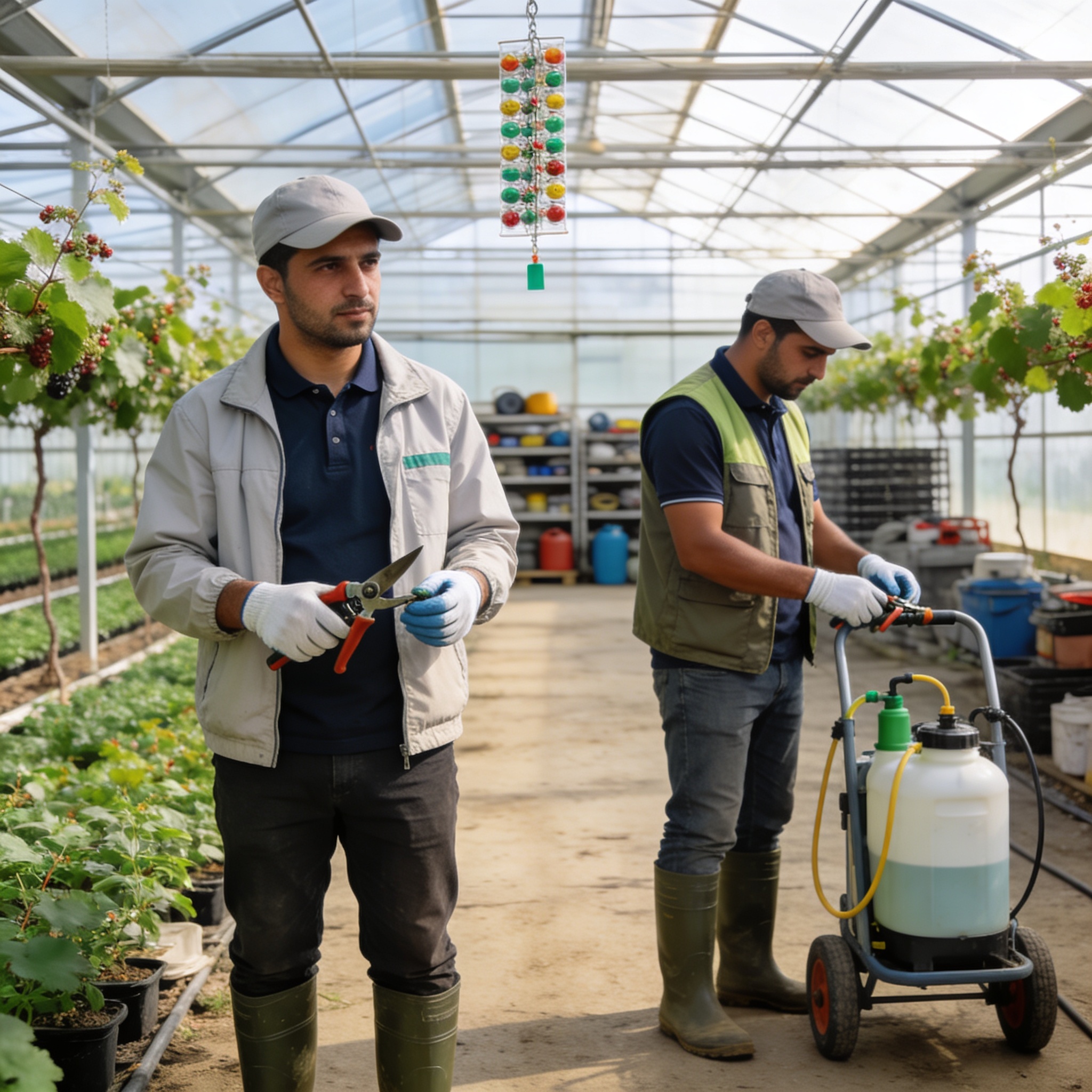
The business rents greenhouse pollination aids, pruning and lowering tools, spray carts, and seasonal crop-care labor support to commercial growers. Buyers pay because missed crop-care windows quickly lead to uneven plant handling, labor stress, and lower saleable output inside greenhouses.
Operator fit: This suits a practical operator who is comfortable with farm visits, scheduling crews, and handling equipment handover without needing a heavy.
Decision snapshot
Investment
AZN 102,250
Monthly profit
AZN 10,200
Payback
~18 months
Customer type
B2B
Tech needed
Medium
Sector
Rental
Quick Decision
Many greenhouse growers in Azerbaijan still handle pruning, lowering, and spraying with improvised tools or temporary labor, which creates inconsistency from row to row.
Specialized greenhouse equipment can be hard to justify as a purchase when it is only needed for specific crop stages or short seasonal periods.
The buyer pool is concentrated, so weak route planning or too much dependence on one greenhouse cluster can leave equipment sitting idle.
What You Are Selling
A rental-and-service business that supplies greenhouse growers with seasonal crop-care tools, on-site setup, and trained crews so they can handle pollination, pruning, lowering, and spraying without buying underused equipment.
Who this is for: A commercial greenhouse grower in Azerbaijan running repeat crop-care tasks across tomato, cucumber, pepper, or berry houses, where delays in pruning, lowering, pollination support, or spraying affect weekly operations.
- Many greenhouse growers in Azerbaijan still handle pruning, lowering, and spraying with improvised tools or temporary labor, which creates inconsistency from row to row.
- Specialized greenhouse equipment can be hard to justify as a purchase when it is only needed for specific crop stages or short seasonal periods.
Financial Detail
| Item | Estimated cost |
|---|---|
| Crop-care rental equipment | AZN 41,500 |
| Service vehicle and transport | AZN 21,000 |
| Permits, registration, insurance | AZN 3,750 |
| Initial tools and consumables | AZN 13,250 |
| Crew training and safety gear | AZN 7,250 |
| Working capital reserve | AZN 15,500 |
| Month 1 | Month 2 | Month 3 | Month 4 | Month 5 | Month 6 | Month 7 | Month 8 | Month 9 | Month 10 | Month 11 | Month 12 | |
|---|---|---|---|---|---|---|---|---|---|---|---|---|
| Revenue | AZN 0 | AZN 0 | AZN 0 | AZN 5,200 | AZN 6,800 | AZN 8,300 | AZN 9,400 | AZN 10,600 | AZN 11,000 | AZN 12,200 | AZN 13,100 | AZN 14,300 |
| Costs | AZN 4,100 | AZN 4,100 | AZN 4,100 | AZN 4,100 | AZN 4,100 | AZN 4,100 | AZN 4,100 | AZN 4,100 | AZN 4,100 | AZN 4,100 | AZN 4,100 | AZN 4,100 |
| Net profit | -AZN 4,100 | -AZN 4,100 | -AZN 4,100 | AZN 1,100 | AZN 2,700 | AZN 4,200 | AZN 5,300 | AZN 6,500 | AZN 6,900 | AZN 8,100 | AZN 9,000 | AZN 10,200 |
| Investment recovery | AZN -106,350 | AZN -110,450 | AZN -114,550 | AZN -113,450 | AZN -110,750 | AZN -106,550 | AZN -101,250 | AZN -94,750 | AZN -87,850 | AZN -79,750 | AZN -70,750 | AZN -60,550 |
Net profit = monthly revenue minus operating costs. Investment recovery = estimated running cash position after deducting the full startup investment, calculated using monthly net profit midpoints. Turns positive when startup investment is fully recovered.
Figures are indicative midpoint estimates. Actual results depend on execution, location, and market conditions.
How This Business Wins
Charge commercial greenhouse growers by asset-day or asset-week for crop-care tool bundles, with transport, setup, and trained-operator support priced as bounded line items tied to seasonal work windows.
- Close the first paying job as a one-site, one-task rental for one week, tied to a current crop-care need such as pruning or spraying support.
- Starter zone package for one greenhouse section during a single weekly crop-care cycle.
- Includes one tool bundle, site setup, and operator handover on first visit.
- Price pollination aids, pruning tools, and spray carts by asset-day or asset-week.
- Add transport and on-site setup as separate line items per visit.
- Use a minimum rental term tied to a defined weekly work window.
- Take a refundable deposit before dispatch and document return condition at pickup.
- Limit quote to named tools, one site, and agreed daily operating hours.
- Charge extra for urgent replacement dispatches, off-hours callouts, and added visits.
Customer and Buying Logic
A commercial greenhouse grower in Azerbaijan running repeat crop-care tasks across tomato, cucumber, pepper, or berry houses, where delays in pruning, lowering, pollination support, or spraying affect weekly operations and the owner prefers rental over capex.
- Greenhouse owner: cares about avoiding equipment purchase, keeping labor productive, and protecting crop quality.
- Site manager: cares about whether the tools fit the greenhouse layout, arrive on time, and do not interrupt daily work.
- Production supervisor: cares about crew speed, consistent plant handling, and having the right tool for the crop stage.
- A busy crop stage creates a short-term labor bottleneck and the greenhouse cannot complete pruning or lowering on schedule.
- An owner wants to avoid buying equipment that will sit unused for much of the year.
- A previous season showed uneven handling, damaged plants, or delayed spraying because crews lacked the right tools.
Most buyers either purchase a small number of basic tools and stretch them across too many workers, or they rely on improvised manual methods.
The offer wins by giving growers working equipment, setup, and optional trained support exactly when crop-care pressure is highest, without forcing.
How You Get First Customers
- Visit greenhouse clusters around Absheron and note which sites are actively running tomato, cucumber, pepper, or berry houses with visible pruning, lowering, or spraying activity.
- Call the site manager or production supervisor first and ask what they currently use for pruning, lowering, and in-house spraying during busy weeks.
- Use agri-input selling points as discovery routes and ask which nearby greenhouse accounts regularly buy greenhouse consumables and have recurring crop-care pressure.
Selling should be founder-led at the start: shortlist a small number of greenhouse accounts, call the site operator, visit only qualified sites, and close a first paid weekly scope around one urgent task rather than pitching a broad service menu.
- Direct phone outreach to greenhouse owners, site managers, and production supervisors in Absheron and nearby protected-culture zones
- WhatsApp follow-up with short equipment photos, task examples, and available rental windows after first contact
- On-site greenhouse visits to qualify fit, inspect layout, and close the first bounded weekly rental
- Start with the exact crop-care gap: pruning, lowering, pollination support, or spraying that is currently delayed, inconsistent, or over-dependent on manual work.
- Show the equipment bundle that fits that task and explain what is included in delivery, setup, and operator briefing.
- Quote on an asset-day or asset-week basis with transport, deposit, and return-condition terms stated clearly.
What You Need To Start
- Capex discipline: standardize the fleet to a short approved list of interchangeable pollination aids, pruning/lowering tools, battery packs, carts, and spare parts; buy refurbished units where reliability is proven; phase purchases only after pre-season reservations reach target utilization; and keep a repair-first protocol before replacing any tool.
- Working capital discipline: require growers to reserve seasonal equipment blocks with deposits before labor and transport are committed, hold consignment stock for fast-moving consumables with supplier billing on use, schedule parts purchases against confirmed service weeks, and avoid carrying broad spare inventory beyond failure-critical components.
- Utilization discipline: cluster deliveries by greenhouse region and crop calendar to keep tools and crews turning across nearby sites in the same week, use standardized setup kits so assets can be redeployed within hours, cross-train crews to switch between pollination, pruning, lowering, and spraying tasks, and retire low-turn specialty units that miss minimum seasonal day rates.
- Standard business registration and tax setup for equipment rental and agricultural service activity.
- Basic service contracts covering equipment responsibility, damage handling, delivery records, and operator safety instructions.
- Starter fleet of greenhouse crop-care tools such as pruning and lowering kits, pollination support equipment, and spray carts suited to protected-culture use.
- Delivery vehicle, basic repair tools, spare wear parts, and simple check-in/check-out documentation for condition control.
- Field coordinator who can handle delivery scheduling, site checks, and customer handover.
- Seasonal crop-care workers or equipment handlers who can support pruning, lowering, spraying, and safe returns.
- Experience in farm supply, agricultural field service, equipment rental, or greenhouse operations.
- Ability to manage routes, speak directly with growers, and enforce deposits, return checks, and job boundaries without damaging relationships.
Risks
- The buyer pool is concentrated, so weak route planning or too much dependence on one greenhouse cluster can leave equipment sitting idle.
- Some specialized tools and replacement parts may need to be sourced through import channels rather than local stock, which can delay repairs during the season.
- If the offer sounds like simple equipment rental instead of uptime support during critical crop-care windows, growers may compare only on daily price and push margins down.
First 12 Months
- 1Map commercial greenhouses in Absheron and other protected-culture clusters, then sort them by crop type, greenhouse size, and whether they run tomato, cucumber, pepper, or berry programs needing repeat crop-care work.
- 2Buy a narrow first fleet of the most usable items such as spray carts, pruning and lowering kits, and pollination support gear, then prepare simple checklists for delivery, return condition, and operator handover.
- 3Call greenhouse site managers and production leads directly, follow up on WhatsApp, and visit qualified sites to check aisle width, water access, power availability, and storage before quoting any rental term.
- 4Close the first paid jobs on short, clearly bounded weekly scopes with transport and setup included, then convert reliable accounts to recurring seasonal blocks with deposits and urgent-replacement clauses.
Final Verdict
Attractive if positioned as a greenhouse uptime rental-and-service offer that removes capex for pollination, pruning, lowering, and spraying during narrow work windows. The main risk is a small, concentrated buyer base, so weak service quality or a vague capex-saving pitch will push CAC up.
This suits a practical operator who is comfortable with farm visits, scheduling crews, and handling equipment handover without needing a heavy technical background. The best fit is someone who can talk to greenhouse managers in plain language, keep jobs moving on time, and solve small on-site problems quickly. A trading or field-service mindset is more useful here than a pure retail background.