Premium Greenhouse Produce Supply for Baku's Commercial Kitchens
You will grow vegetables in a climate-controlled greenhouse and sell them directly to commercial buyers like restaurants and supermarkets. These buyers pay more for a local supplier who can deliver the same quality every week, avoiding the high cost and poor freshness of imported vegetables.
Operator fit: This business suits someone with practical growing experience or strong relationships in Baku's food service sector.
Decision snapshot
Investment
AZN 53,500
Monthly profit
AZN 16,500
Payback
~13 months
Customer type
B2B
Tech needed
Light tech
Sector
Agriculture
Quick Decision
Local open-field farming stops in winter, forcing commercial kitchens to buy expensive, lower-quality imports from Turkey or Iran that lose freshness in transit.
Hotels and restaurants in Baku need predictable supply for daily menus but face constant price swings and quality issues at the wholesale markets like Yasamal or Badamdar.
Winter heating costs using local natural gas or electricity can consume over 30% of revenue if the greenhouse structure is not properly sealed and insulated.
What You Are Selling
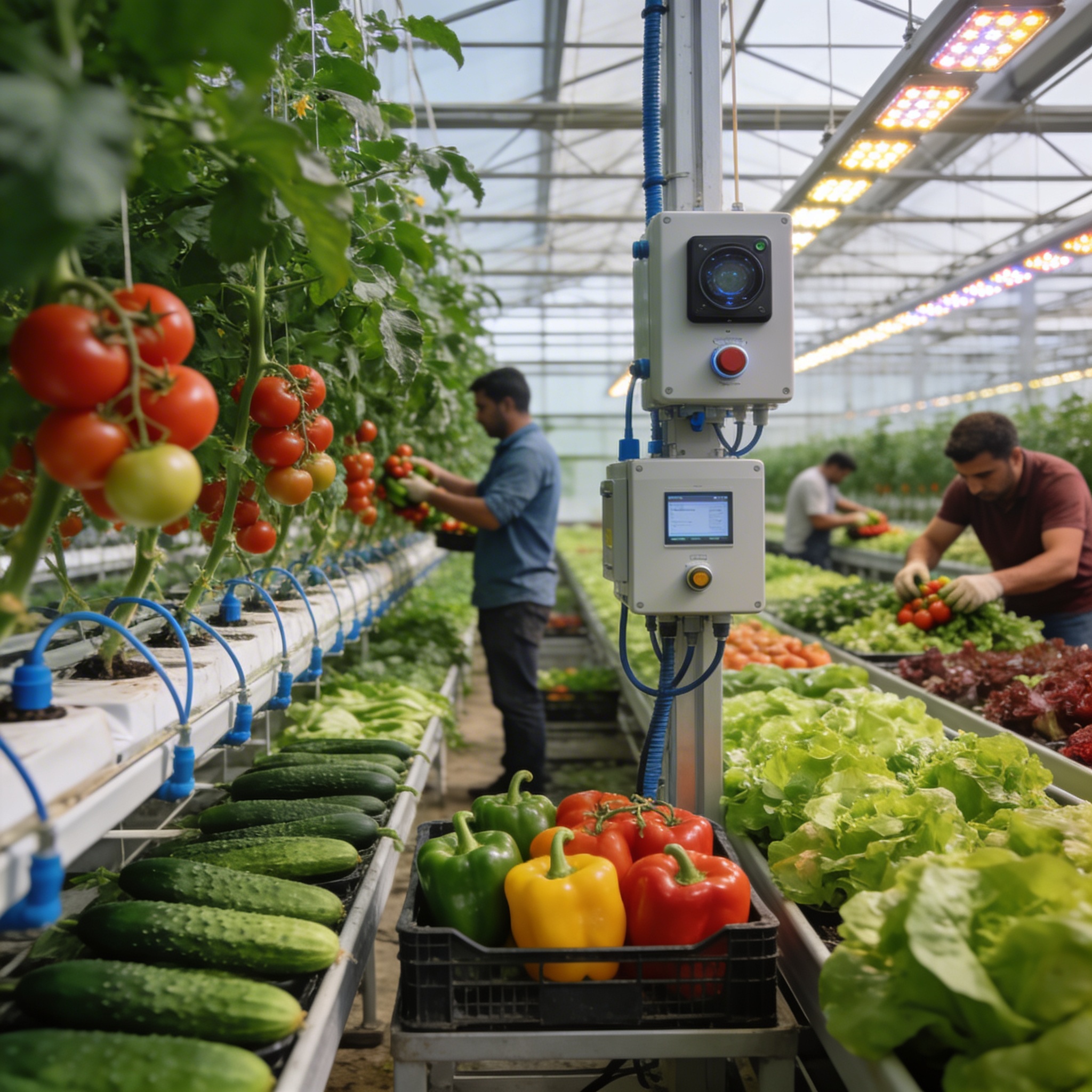
A greenhouse operation supplying consistent, high-quality tomatoes, cucumbers, and peppers directly to restaurants, hotels, and supermarkets in Azerbaijan, replacing unreliable imports and seasonal local supply.
Who this is for: Your ideal customer is a commercial kitchen in Baku that spends a significant portion of its budget on fresh vegetables, operates daily, and has been frustrated by the inconsistency of the wholesale bazaar.
- Local open-field farming stops in winter, forcing commercial kitchens to buy expensive, lower-quality imports from Turkey or Iran that lose freshness in transit.
- Hotels and restaurants in Baku need predictable supply for daily menus but face constant price swings and quality issues at the wholesale markets like Yasamal or Badamdar.
Financial Detail
| Item | Estimated cost |
|---|---|
| Greenhouse structure & climate control | AZN 22,500 |
| Irrigation system & growing equipment | AZN 8,500 |
| Initial seeds, nutrients, and growing media | AZN 3,500 |
| Business registration, permits, and legal fees | AZN 2,000 |
| Initial working capital for 3-4 months | AZN 17,000 |
| Month 1 | Month 2 | Month 3 | Month 4 | Month 5 | Month 6 | Month 7 | Month 8 | Month 9 | Month 10 | Month 11 | Month 12 | |
|---|---|---|---|---|---|---|---|---|---|---|---|---|
| Revenue | AZN 0 | AZN 0 | AZN 0 | AZN 0 | AZN 0 | AZN 0 | AZN 16,000 | AZN 19,000 | AZN 21,000 | AZN 23,000 | AZN 24,000 | AZN 24,000 |
| Costs | AZN 7,500 | AZN 7,500 | AZN 7,500 | AZN 7,500 | AZN 7,500 | AZN 7,500 | AZN 7,500 | AZN 7,500 | AZN 7,500 | AZN 7,500 | AZN 7,500 | AZN 7,500 |
| Net profit | -AZN 7,500 | -AZN 7,500 | -AZN 7,500 | -AZN 7,500 | -AZN 7,500 | -AZN 7,500 | AZN 8,500 | AZN 11,500 | AZN 13,500 | AZN 15,500 | AZN 16,500 | AZN 16,500 |
| Investment recovery | AZN -61,000 | AZN -68,500 | AZN -76,000 | AZN -83,500 | AZN -91,000 | AZN -98,500 | AZN -90,000 | AZN -78,500 | AZN -65,000 | AZN -49,500 | AZN -33,000 | AZN -16,500 |
Net profit = monthly revenue minus operating costs. Investment recovery = estimated running cash position after deducting the full startup investment, calculated using monthly net profit midpoints. Turns positive when startup investment is fully recovered.
Figures are indicative midpoint estimates. Actual results depend on execution, location, and market conditions.
How This Business Wins
We price by the kilogram for guaranteed weekly volumes, using a starter zone offer to secure initial contracts before expanding to multi-crop bundles and annual supply agreements.
- Close the first client on a specific, bounded trial: a fixed weekly volume of one product for one month.
- First-season commitment: supply up to 100 kg weekly of a single crop (e.g., cluster tomatoes) to one restaurant group or supermarket.
- Introductory fixed price per kg for the initial 3-month contract, with one complimentary delivery setup and quality audit.
- Price per kilogram based on crop type, with tomatoes commanding a 15-20% premium over cucumbers and peppers due to higher buyer demand.
- Minimum weekly order of 50 kg per buyer to justify dedicated delivery runs and ensure batch viability.
- Contracts lock in price for a 3-month season, protecting against wholesale market fluctuations while allowing for seasonal adjustments.
- Require a 15% deposit on the first month's estimated volume for all new contracts to secure commitment.
- Define clear out-of-scope terms: special packaging, expedited same-day deliveries, or orders below the 50 kg minimum incur a 25% surcharge.
- Contract includes a price adjustment clause tied only to verified increases in utility (energy) costs exceeding 10%, preventing erosion from winter heating.
Customer and Buying Logic
Your ideal customer is a commercial kitchen in Baku that spends a significant portion of its budget on fresh vegetables, operates daily, and has been frustrated by the inconsistency of the wholesale bazaar. This is typically a restaurant serving 80+ meals per day or a hotel with 100+ rooms, where the chef values menu planning reliability over chasing the lowest daily price.
- Head Chef: Cares about consistent size, color, and taste for plate presentation; hates last-minute supplier failures that disrupt service.
- Hotel Procurement Officer: Focuses on contract reliability and documented food safety standards to supply multiple outlets; negotiates fixed weekly prices.
- Supermarket Produce Buyer: Needs uniform grading and reliable volume for shelf stocking; motivated by 'Local Product' labeling to attract customers.
- A bad experience with rotten or undersized produce from the bazaar that disrupted their kitchen service.
- Facing a price hike from importers due to currency fluctuations or border delays.
- Planning a winter menu and realizing their usual local field supplier has no product available.
Buyers currently purchase from the wholesale bazaar, where quality and price change daily, or from importers selling Turkish and Iranian produce.
How You Get First Customers
- Visit mid-to-high-end restaurant kitchens in Baku and Sumgait during afternoon prep hours to speak directly with head chefs about their current produce sourcing challenges.
- Contact procurement officers at hotel groups with multiple restaurants or banquet facilities, focusing on their need for consistent, year-round supply for daily menu planning.
- Meet with produce buyers at local supermarket chains like Araz or Aztac to demonstrate the quality and reliability of your greenhouse-grown tomatoes, cucumbers, and peppers.
The founder must make the first 20-30 sales.
- Direct, in-person visits to restaurants during off-peak hours (2-4 PM) with a sample box of your produce.
- Warm introductions from existing clients to other chefs in their network, facilitated by a thank-you delivery for any successful referral.
- Participation as a supplier in local food service or hospitality business events in Baku.
- Open by showing a sample of your produce, highlighting its freshness, uniformity, and lack of transit damage.
- Explain your location near Baku and your ability to deliver on the same day every week, regardless of the season.
- Present a simple price list for a weekly volume, comparing it to the instability of the bazaar price and the lower freshness of imports.
What You Need To Start
- Start with one greenhouse unit; do not build a second until the first is consistently sold out for three months.
- Lease land instead of buying it to preserve startup capital.
- Use manual record-keeping initially; avoid expensive farm management software until you have several regular clients.
- Business registration as a private entrepreneur or LLC from the State Tax Service.
- A phytosanitary certificate from the relevant agricultural authority for selling plant products.
- A basic greenhouse structure (500-1000 sqm) with frame, polycarbonate sheeting, and irrigation lines.
- Essential tools: seedling trays, pruning shears, harvesting crates, a manual sprayer for treatments, and a reliable scale.
- One full-time worker for daily watering, pruning, harvesting, and basic maintenance.
- A driver with their own vehicle for deliveries, hired on a contract basis initially, not full-time.
- Some hands-on experience with growing plants, even in a garden or small plot, is highly valuable.
- Comfort with direct sales and negotiation, preferably with existing contacts in Baku's restaurant or hotel sector.
Risks
- Winter heating costs using local natural gas or electricity can consume over 30% of revenue if the greenhouse structure is not properly sealed and insulated.
- A buyer may cancel a weekly order with short notice, leaving you with highly perishable produce that must be sold quickly at a loss.
- Disease like powdery mildew or botrytis can spread rapidly in a greenhouse, potentially destroying an entire crop cycle before it can be harvested.
First 12 Months
- 1Secure a 1-2 hectare land lease near a major road within 50km of Baku, verifying reliable water access and electricity connection before signing.
- 2Construct one 500-1000 sqm greenhouse using a local contractor, specifying double-layer polycarbonate for winter insulation and automated roof vents for summer heat.
- 3Source seedling trays of cluster tomatoes and Beit Alpha cucumbers from a reputable agri-supplier in Guba or Imishli, and begin the first growth cycle.
- 4At first harvest, personally deliver sample boxes to 15-20 pre-identified head chefs and supermarket buyers in Baku to negotiate weekly supply agreements.
Final Verdict
This is a viable business for an operator who can manage both daily greenhouse operations and direct Baku sales relationships. The key risk is locking in enough contract volume before your first harvest to ensure no produce is wasted.
This business suits someone with practical growing experience or strong relationships in Baku's food service sector. You need patience for the 3-6 month crop cycle and the discipline to manage daily climate and irrigation checks. Success depends more on consistent, hands-on management and direct buyer relationships than on technical agriculture degrees.