Small Cold Storage Rooms for Azerbaijani Farms and Food Businesses
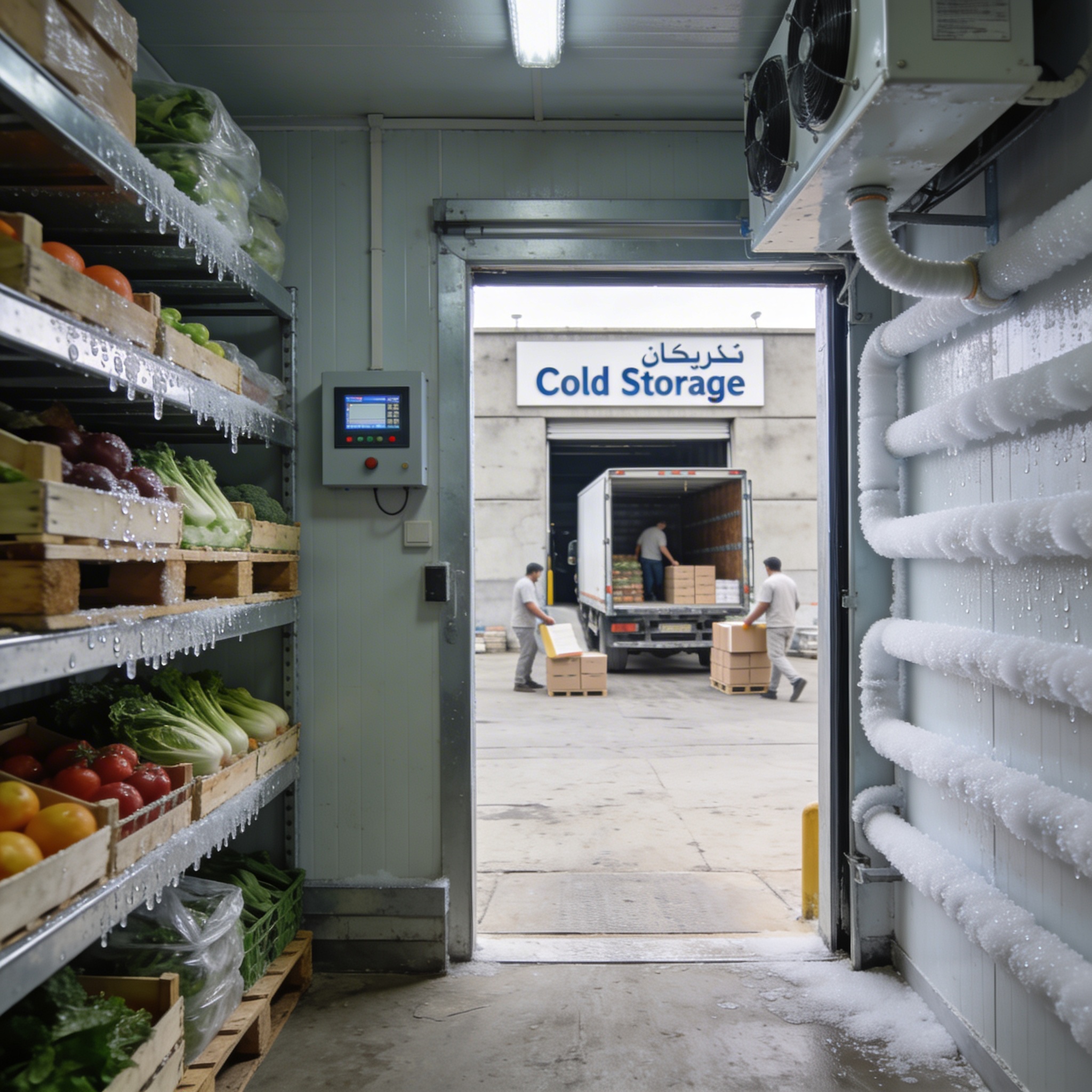
You sell the construction and installation of small, insulated cold storage rooms, typically 10-30 cubic meters, designed for on-site use. Buyers pay to prevent spoilage of their harvests and dairy products, which directly impacts their income and ability to sell to better markets.
Operator fit: This suits someone who is comfortable managing a small construction project and enjoys building relationships with local business owners.
Decision snapshot
Investment
AZN 58,250
Monthly profit
AZN 16,500
Payback
~14 months
Customer type
B2B
Tech needed
Light tech
Sector
Agriculture
Quick Decision
Smallholder farms near Goychay, Masalli, or Lankaran lose tomatoes, cucumbers, and berries within days of harvest because they cannot get them to distant large cold stores in time.
Local dairy producers making cheese or ayran struggle with inconsistent quality when their own small refrigerators fail or are insufficient for bulk storage.
Your initial construction cost estimate could be wrong if material prices rise or your installation partner encounters unforeseen site issues, eating into your first project's margin.
What You Are Selling
You build and install compact, efficient cold rooms on farms and at food businesses to preserve produce and dairy, generating revenue from monthly or seasonal storage contracts.
Who this is for: Small to medium greenhouse farms, dairy producers, and local food wholesalers who currently lose income from spoilage due to lacking on-site cooling.
- Smallholder farms near Goychay, Masalli, or Lankaran lose tomatoes, cucumbers, and berries within days of harvest because they cannot get them to distant large cold stores in time.
- Local dairy producers making cheese or ayran struggle with inconsistent quality when their own small refrigerators fail or are insufficient for bulk storage.
Financial Detail
| Item | Estimated cost |
|---|---|
| Cold room unit manufacturing materials | AZN 15,000 |
| Refrigeration system and compressor unit | AZN 11,500 |
| Installation equipment and labor | AZN 8,000 |
| Business registration, permits, and licenses | AZN 2,250 |
| Initial marketing and customer acquisition | AZN 3,000 |
| Working capital for first 3 months | AZN 18,500 |
| Month 1 | Month 2 | Month 3 | Month 4 | Month 5 | Month 6 | Month 7 | Month 8 | Month 9 | Month 10 | Month 11 | Month 12 | |
|---|---|---|---|---|---|---|---|---|---|---|---|---|
| Revenue | AZN 0 | AZN 0 | AZN 0 | AZN 0 | AZN 0 | AZN 0 | AZN 15,000 | AZN 18,000 | AZN 20,000 | AZN 22,000 | AZN 23,000 | AZN 24,000 |
| Costs | AZN 7,500 | AZN 7,500 | AZN 7,500 | AZN 7,500 | AZN 7,500 | AZN 7,500 | AZN 7,500 | AZN 7,500 | AZN 7,500 | AZN 7,500 | AZN 7,500 | AZN 7,500 |
| Net profit | -AZN 7,500 | -AZN 7,500 | -AZN 7,500 | -AZN 7,500 | -AZN 7,500 | -AZN 7,500 | AZN 7,500 | AZN 10,500 | AZN 12,500 | AZN 14,500 | AZN 15,500 | AZN 16,500 |
| Investment recovery | AZN -65,750 | AZN -73,250 | AZN -80,750 | AZN -88,250 | AZN -95,750 | AZN -103,250 | AZN -95,750 | AZN -85,250 | AZN -72,750 | AZN -58,250 | AZN -42,750 | AZN -26,250 |
Net profit = monthly revenue minus operating costs. Investment recovery = estimated running cash position after deducting the full startup investment, calculated using monthly net profit midpoints. Turns positive when startup investment is fully recovered.
Figures are indicative midpoint estimates. Actual results depend on execution, location, and market conditions.
How This Business Wins
We price based on the cubic meter capacity of the installed cold room, securing revenue through an upfront build fee followed by recurring storage contracts.
- Offer a single, smallest standard cold room (e.g., 10 cubic meters) installation for one season to a reference farm, with a discounted construction fee but full seasonal storage rate.
- Install a single 10-cubic-meter starter room for a key initial farm or dairy.
- Bundle the first season's storage at a 20% discount with the construction fee.
- Charge a one-time construction and installation fee per cubic meter of insulated space.
- Secure recurring revenue via monthly or seasonal rental contracts for the storage capacity.
- Require a minimum 3-month contract to ensure payback on installation costs.
- Require a 30% deposit on the construction fee before work begins.
- Define a clear scope of supply; charge extra for site prep, extended power runs, or custom shelving.
- Include a scheduled maintenance contract priced per visit to cover service costs.
Customer and Buying Logic
Small to medium greenhouse farms, dairy producers, and local food wholesalers who currently lose income from spoilage due to lacking on-site cooling. They need affordable, compact cold storage to preserve daily harvests and dairy products for monthly or seasonal sale.
- Farm Owner/Overseer: Cares about reducing post-harvest losses immediately and extending the sales window to get better prices at the market.
- Dairy Production Manager: Focused on consistent product quality, meeting buyer specifications, and avoiding losses from refrigeration failure.
- Wholesale Buyer/Aggregator: Needs reliable, proximate storage to hold inventory before distribution, reducing transport costs and time pressure.
- A farm experiences a significant loss (e.g., several tons of tomatoes) due to a heatwave and lack of cooling.
- A dairy producer fails a quality audit or loses a restaurant contract due to temperature inconsistency in their current setup.
- A wholesaler misses a delivery because the distant cold store was inaccessible or fully booked during a peak harvest period.
Today, most small farms rush their harvest to market immediately, accepting lower prices, or pay for expensive, infrequent transport to a large,.
You win by providing a dedicated, on-site solution that eliminates transport costs and uncertainty.
How You Get First Customers
- Visit regional agricultural supply stores and talk to owners about which local farms are active and commercially focused.
- Attend local farmer meetings or cooperative gatherings in districts known for specific crops (e.g., Goychay for pomegranates) to introduce yourself.
- Identify and directly call or visit food wholesalers in Baku's wholesale market areas, asking about their current storage challenges and costs.
Identify target farms and food businesses through direct visits to agricultural regions and referrals from initial customers.
- Direct, in-person visits to farms and food businesses, using a local introduction or simply arriving during business hours.
- WhatsApp and phone follow-ups with leads met at supply stores or agricultural events, sharing photos of completed projects.
- Asking your first satisfied customers for a direct introduction to one other farmer or business owner they know.
- Open with a question about their biggest spoilage issue in the last season and what it cost them.
- Show photos of a similar farm's installed room and explain how it solved that exact problem.
- Walk through the simple build process, your local partners, and the timeline (e.g., '3-4 weeks from agreement to operation').
What You Need To Start
- Capex discipline: Standardize designs for 10, 20, and 30 cubic meter units using locally sourced, prefabricated insulation panels to minimize custom fabrication and installation labor.
- Working capital discipline: Require a 50% deposit upon signing the construction contract, with the balance due upon completion, before the unit is operational.
- Utilization discipline: Implement a seasonal pricing model that offers discounts for off-peak storage contracts to fill capacity year-round, avoiding idle assets.
- General business registration as a limited liability company or individual entrepreneur.
- Potential local municipal permission for construction if modifying existing structures, though freestanding units often have simpler requirements.
- Basic construction tools for your installation team.
- A reliable vehicle for transporting materials and visiting sites.
- A simple temperature data logger to demonstrate room performance to prospects.
- A trusted, skilled refrigeration technician on a subcontract basis for each project.
- A general construction helper or small team for insulation and assembly, also on subcontract.
- Yourself as the full-time sales, project management, and coordination lead.
- Some experience in coordinating tradespeople or small construction projects.
- Comfort with basic financials, creating simple cost estimates, and managing contracts.
- Strong local language skills and the ability to build trust with farmers and business owners in person.
Risks
- Your initial construction cost estimate could be wrong if material prices rise or your installation partner encounters unforeseen site issues, eating into your first project's margin.
- If you cannot secure enough pre-paid seasonal contracts, you may finish a room with no tenant, leaving you to cover the monthly operating costs yourself.
- Power outages in rural areas can compromise storage conditions; you must plan for a backup power solution or clearly manage this expectation with the customer.
First 12 Months
- 1Identify and secure verbal agreements with 2-3 specific farms or a dairy producer in a target region like Ismayilli or Shamakhi, focusing on their upcoming harvest or production cycle.
- 2Finalize a simple, cost-effective design using locally available insulation materials (like expanded polystyrene panels) and partner with a reliable refrigeration technician and builder in your area.
- 3Build the first unit for your most committed initial customer, using this project to establish your build process, finalize costs, and create a portfolio of photos and a reference.
- 4Begin direct visits and WhatsApp conversations with greenhouse owners, orchard managers, and local food aggregators, offering to build a room for their next season, using your first project as proof.
Final Verdict
This is a viable business if you can secure pre-commitments before building. The key risk is underestimating construction costs on your first project.
This suits someone who is comfortable managing a small construction project and enjoys building relationships with local business owners. You need to be on-site to coordinate builders and refrigeration technicians, and you must be persuasive in person and on the phone to sell the service. A background in agriculture, local trade, or small project management is more useful than a purely technical or corporate sales background.