Olive Oil Bottling Service for Local Producers
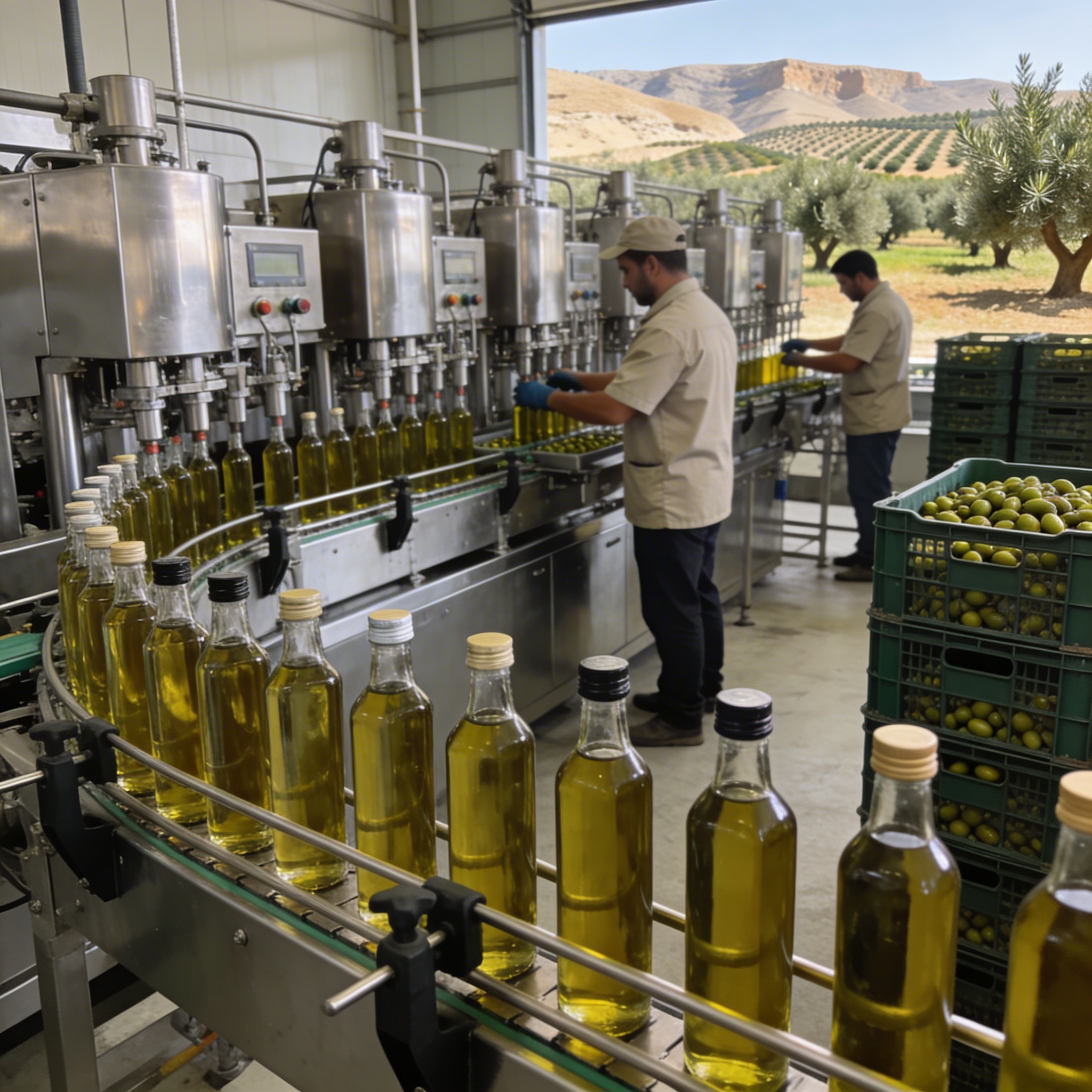
We provide a complete bottling, labeling, and packaging service for olive oil producers who lack their own production line. Buyers pay us because selling oil in bulk to middlemen sacrifices significant retail profit, and supermarkets or export partners will not accept oil in unprofessional containers.
Operator fit: This is best run by someone with hands-on experience in production, logistics, or food handling.
Decision snapshot
Investment
AZN 53,500
Monthly profit
AZN 16,500
Payback
~14 months
Customer type
B2B
Tech needed
Light tech
Sector
Agriculture
Quick Decision
Small olive farms in regions like Guba-Khachmaz press oil but cannot justify the high capital investment for their own bottling machinery.
Local food brands and Baku-based exporters need shelf-ready, branded products but find the process of building and certifying a packaging facility too complex.
If your single bottling machine breaks down, all income stops; you must have a local technician on a retainer and a manual process for small, urgent orders.
What You Are Selling
A contract service that bottles, labels, and packages bulk olive oil for farms and food companies, turning their raw product into retail-ready goods.
Who this is for: The ideal client is an olive oil producer or aggregator with at least 500 liters of oil per batch ready for market, who currently sells in bulk or in unbranded containers.
- Small olive farms in regions like Guba-Khachmaz press oil but cannot justify the high capital investment for their own bottling machinery.
- Local food brands and Baku-based exporters need shelf-ready, branded products but find the process of building and certifying a packaging facility too complex.
Financial Detail
| Item | Estimated cost |
|---|---|
| Bottling and Packaging Equipment | AZN 20,000 |
| Facility Setup and Utilities Installation | AZN 10,000 |
| Business Registration and Permits | AZN 3,000 |
| Initial Label and Packaging Material Stock | AZN 6,500 |
| Working Capital for Initial Operations | AZN 14,000 |
| Month 1 | Month 2 | Month 3 | Month 4 | Month 5 | Month 6 | Month 7 | Month 8 | Month 9 | Month 10 | Month 11 | Month 12 | |
|---|---|---|---|---|---|---|---|---|---|---|---|---|
| Revenue | AZN 0 | AZN 0 | AZN 0 | AZN 0 | AZN 0 | AZN 0 | AZN 15,000 | AZN 18,000 | AZN 20,000 | AZN 22,000 | AZN 23,000 | AZN 24,000 |
| Costs | AZN 7,500 | AZN 7,500 | AZN 7,500 | AZN 7,500 | AZN 7,500 | AZN 7,500 | AZN 7,500 | AZN 7,500 | AZN 7,500 | AZN 7,500 | AZN 7,500 | AZN 7,500 |
| Net profit | -AZN 7,500 | -AZN 7,500 | -AZN 7,500 | -AZN 7,500 | -AZN 7,500 | -AZN 7,500 | AZN 7,500 | AZN 10,500 | AZN 12,500 | AZN 14,500 | AZN 15,500 | AZN 16,500 |
| Investment recovery | AZN -61,000 | AZN -68,500 | AZN -76,000 | AZN -83,500 | AZN -91,000 | AZN -98,500 | AZN -91,000 | AZN -80,500 | AZN -68,000 | AZN -53,500 | AZN -38,000 | AZN -21,500 |
Net profit = monthly revenue minus operating costs. Investment recovery = estimated running cash position after deducting the full startup investment, calculated using monthly net profit midpoints. Turns positive when startup investment is fully recovered.
Figures are indicative midpoint estimates. Actual results depend on execution, location, and market conditions.
How This Business Wins
We price per bottle to convert bulk oil into retail-ready goods, with a starter batch to prove quality and structured guardrails to protect margins as client volumes grow.
- Offer the first client a discounted rate for a 500-bottle batch, paid 50% upfront and 50% on completion.
- First-batch discount of 10% for the initial 500-bottle order to demonstrate service quality and build trust.
- Include standard 500ml clear glass bottle, tamper-evident cap, and one-color front label design in the base per-bottle fee.
- Charge a fixed fee per 500ml bottle filled, capped, and labeled, covering all materials except custom label printing.
- Minimum order of 500 bottles per batch to cover machine setup, cleaning, and labor costs.
- Offer a 5% discount for clients committing to three or more batches within one harvest season to secure predictable workflow.
- Require a 50% deposit upon order confirmation, with the balance due before shipment release to secure cash flow.
- Formal change-order process for any mid-batch adjustments to bottle size, label design, or materials, triggering a revised quote.
- Clearly state that cross-contamination cleaning cycles and storage of client-owned bulk oil are included, but extra storage days incur fees.
Customer and Buying Logic
The ideal client is an olive oil producer or aggregator with at least 500 liters of oil per batch ready for market, who currently sells in bulk or in unbranded containers. They are frustrated by low wholesale prices and are actively seeking better retail or export opportunities that require professional packaging.
- Farm Owner: Cares about maximizing profit from their harvest, needs a simple, reliable service that doesn't require their time or capital.
- Food Store Owner: Cares about having a unique, high-quality private label product for their shelf with their branding, needs clear pricing and timely delivery.
- Cooperative Manager: Cares about providing a valuable service to member farmers, needs consistent quality, volume handling, and documentation for bulk sales.
- A supermarket chain or export buyer has just rejected their oil due to non-compliant or unbranded packaging.
- They have calculated the significant price difference between selling in bulk versus selling their own bottled product and want to capture that margin.
- Their upcoming harvest is larger than usual, and they need a professional solution to market it effectively.
Today, most small producers sell their oil in bulk to a local intermediary or wholesaler, who then bottles and brands it themselves, capturing most.
How You Get First Customers
- Visit regional agricultural offices in Guba, Khachmaz, and Jalilabad to get lists of registered olive growers and cooperative associations.
- Attend local food and agriculture fairs in Baku and regional centers to meet farm owners and food brand managers in person.
- Contact suppliers of agricultural equipment and olive presses; they often know which farms are producing oil and can provide introductions.
The founder must lead sales through direct visits and phone calls.
- Direct, in-person visits to farms and cooperatives in the Guba-Khachmaz and Jalilabad regions.
- Referrals from existing clients, incentivized with a credit toward their next order for every new client who signs a contract.
- Building relationships with olive press operators and agricultural input suppliers who can recommend your service to their customers.
- Start by showing them a sample of their own oil (if possible) in your professionally bottled container next to their current container.
- Clearly break down the math: the price they get per liter in bulk versus the estimated retail price per bottle, minus your fee.
- Explain your process step-by-step, emphasizing quality control, hygiene, and on-time delivery.
What You Need To Start
- Start by renting the smallest viable workspace; do not commit to a large facility until you have contracted volume.
- Buy a quality used bottling machine instead of new; focus on reliability over advanced features.
- Negotiate payment terms with bottle and label suppliers to match your client payment cycles.
- A business registration for light manufacturing or food processing from the Ministry of Economy.
- A sanitary-epidemiological conclusion from the Agency for Food Safety for the bottling facility.
- A semi-automatic piston filler or gravity filler machine for glass bottles.
- A manual or semi-automatic label applicator, capping machine, and a worktable for quality inspection.
- A production assistant for bottle washing, machine operation, and cleaning.
- A driver/logistics person for collecting oil from clients and delivering finished goods.
- Practical experience managing a production process, logistics, or quality control.
- Comfort with direct B2B sales, negotiation, and building relationships with agricultural clients.
Risks
- If your single bottling machine breaks down, all income stops; you must have a local technician on a retainer and a manual process for small, urgent orders.
- Your revenue is tied to client harvests, so a poor olive yield or bad weather in key regions can sharply reduce your annual batch volume.
- Failing to clean equipment thoroughly between different clients' oils will ruin product quality and destroy trust; you need strict, documented cleaning procedures.
First 12 Months
- 1Secure a small, clean industrial space with water and drainage, prioritizing areas near Guba or Sumgait for lower rent and proximity to client farms.
- 2Purchase a reliable, used semi-automatic bottling machine and label applicator, and establish supply agreements in Baku for glass bottles, caps, and label printing.
- 3In the first two months, personally visit 20-30 olive farm owners and food company managers, bringing physical samples of finished bottles and offering a discounted rate for their first 500-bottle order.
- 4Secure signed contracts with your first 2-3 clients for their upcoming harvest before hiring any permanent staff or investing in marketing materials.
Final Verdict
This is a viable business for an operator who can build trust with local farmers and execute production reliably. The key risk is dependency on seasonal harvests, so securing multi-client contracts before launch is critical.
This is best run by someone with hands-on experience in production, logistics, or food handling. The operator needs to be disciplined with quality control, comfortable visiting farms and negotiating B2B contracts directly, and able to manage equipment maintenance. A background in agriculture, food sales, or light manufacturing is a strong fit.