Steel Racking Supply for Warehouse Storage
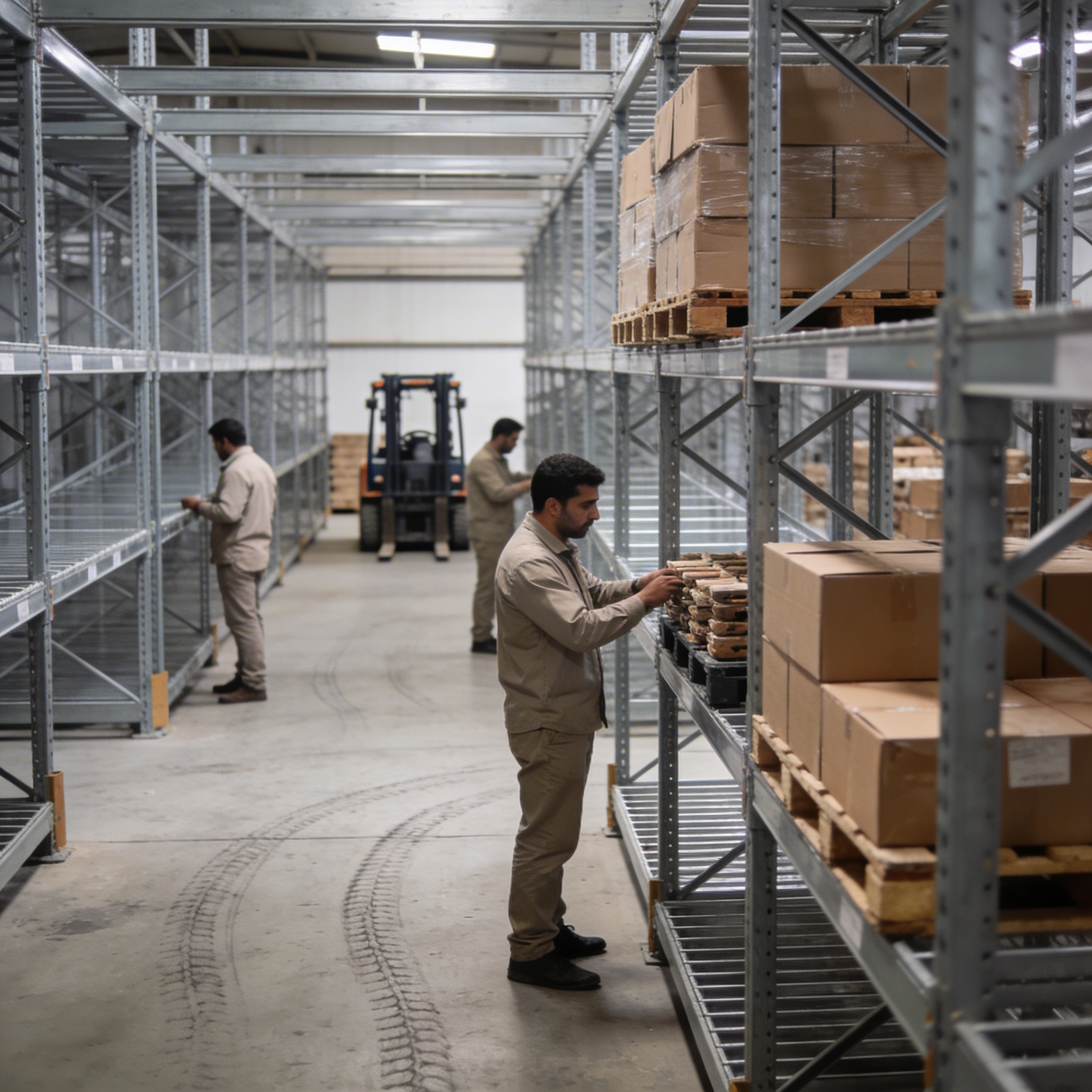
You sell complete steel racking systems, including beams, uprights, and safety accessories, imported from established manufacturers. Warehouse managers pay because disorganized storage leads to lost inventory, damaged goods, and wasted labor hours searching for items.
Operator fit: This suits someone with experience in B2B trading or construction materials, who understands import paperwork and logistics.
Decision snapshot
Investment
AZN 6,100
Monthly profit
AZN 7,500
Payback
6 months
Customer type
B2B
Tech needed
Light tech
Sector
Logistics transport
Quick Decision
Local warehouses often build makeshift wooden shelves that collapse under weight, damaging expensive stock.
Expanding businesses hit a wall where floor-only storage becomes unsafe and limits their growth capacity.
Customs valuation disputes can add unexpected costs and delay your entire project schedule by weeks.
What You Are Selling
Import and install steel racking systems for local warehouses and distributors, turning storage space into organized, efficient capacity.
Who this is for: Small to medium warehouse operators and distributors in Azerbaijan who struggle with disorganized storage, leading to lost inventory and wasted labor.
- Local warehouses often build makeshift wooden shelves that collapse under weight, damaging expensive stock.
- Expanding businesses hit a wall where floor-only storage becomes unsafe and limits their growth capacity.
Financial Detail
| Item | Estimated cost |
|---|---|
| Initial Inventory Purchase | AZN 3,000 |
| Essential Import Tools & Equipment | AZN 1,150 |
| Business Registration & Legal Fees | AZN 500 |
| Marketing & Initial Client Outreach | AZN 850 |
| Working Capital / Buffer Funds | AZN 600 |
| Month 1 | Month 2 | Month 3 | Month 4 | Month 5 | Month 6 | Month 7 | Month 8 | Month 9 | Month 10 | Month 11 | Month 12 | |
|---|---|---|---|---|---|---|---|---|---|---|---|---|
| Revenue | AZN 0 | AZN 0 | AZN 0 | AZN 5,500 | AZN 7,200 | AZN 8,400 | AZN 9,000 | AZN 9,400 | AZN 9,400 | AZN 9,400 | AZN 9,400 | AZN 9,400 |
| Costs | AZN 1,900 | AZN 1,900 | AZN 1,900 | AZN 1,900 | AZN 1,900 | AZN 1,900 | AZN 1,900 | AZN 1,900 | AZN 1,900 | AZN 1,900 | AZN 1,900 | AZN 1,900 |
| Net profit | -AZN 1,900 | -AZN 1,900 | -AZN 1,900 | AZN 3,600 | AZN 5,300 | AZN 6,500 | AZN 7,100 | AZN 7,500 | AZN 7,500 | AZN 7,500 | AZN 7,500 | AZN 7,500 |
| Investment recovery | AZN -8,000 | AZN -9,900 | AZN -11,800 | AZN -8,200 | AZN -2,900 | AZN 3,600 | AZN 10,700 | AZN 18,200 | AZN 25,700 | AZN 33,200 | AZN 40,700 | AZN 48,200 |
Net profit = monthly revenue minus operating costs. Investment recovery = estimated running cash position after deducting the full startup investment, calculated using monthly net profit midpoints. Turns positive when startup investment is fully recovered.
Figures are indicative midpoint estimates. Actual results depend on execution, location, and market conditions.
How This Business Wins
We price complete racking projects based on the total linear meter of beam and upright installed, with a minimum project size to ensure viability.
- Your first paid project should be a bounded, single-zone installation for a known contact or a very eager early adopter.
- Starter package for a single warehouse zone, covering up to 80 linear meters of basic racking.
- Includes standard beams, uprights, and safety clips, with installation completed within one week.
- Price per linear meter of installed racking, covering all imported components and assembly labor.
- Minimum project size of 50 linear meters to justify import logistics and on-site installation.
- Full payment structured as 50% deposit upon order and 50% upon completion of installation.
- Deposit secures material purchase and locks in pricing before import shipment is initiated.
- Clear change-order process for any additions beyond the signed layout diagram, billed at a premium rate.
- Contract explicitly excludes electrical work, flooring modifications, or special seismic bracing as out-of-scope.
Customer and Buying Logic
Small to medium warehouse operators and distributors in Azerbaijan who struggle with disorganized storage, leading to lost inventory and wasted labor. They are actively expanding or reorganizing their storage space and need a complete, installed racking solution.
- Warehouse Manager: Cares about safety, worker efficiency, and maximizing pallet positions within their existing floor space.
- Company Owner/Director: Cares about cost, return on investment, and avoiding stock damage that hits their bottom line.
- Logistics Supervisor: Cares about smooth daily operations, clear labeling, and easy access for loading/unloading teams.
- A recent incident where a wooden shelf failed and damaged valuable inventory.
- The business is taking on a new large client contract and needs to organize stock quickly.
- The owner is tired of paying workers for extra time spent searching for misplaced items.
Most warehouses use a mix of old, unstable wooden shelving, stack pallets directly on the floor, or order basic racks from a local fabricator.
You win by providing a complete, reliable solution faster than local fabricators and with better engineering than makeshift shelves.
How You Get First Customers
- Drive through major industrial zones like Baku Industrial Park, noting company names and visibly assessing storage conditions from the street.
- Ask for introductions from your network in construction, trucking, or packaging supplies—they often know who is expanding.
- Attend local trade fairs for logistics, construction, or retail, focusing on exhibitors who are distributors or manufacturers.
Source leads by visiting industrial zones in Baku and Sumgayit to identify warehouses with visibly disorganized storage.
- Direct, in-person visits to target warehouses, requesting a 10-minute meeting with the manager.
- WhatsApp follow-ups with your portfolio photos and a brief case study after an initial visit.
- Referrals from your first clients, offering them a credit toward future accessories for a successful introduction.
- Start with a question: 'How much time does your team lose each day looking for items in the warehouse?'
- Show before/after photos of similar spaces, highlighting the gain in organized capacity.
- Present a simple calculation: cost of the system versus the value of recovered floor space and reduced damage.
What You Need To Start
- Start by securing supplier agreements that don't require large upfront inventory purchases; order per project.
- Use client deposits to fund the material purchase for each job, minimizing your cash outlay.
- Begin with one reliable installation partner on a per-project basis instead of hiring full-time employees.
- Standard business registration for import and commercial trading activities.
- Ensure compliance with local safety standards for installed equipment, though specific permits are typically the client's responsibility for their building.
- A reliable vehicle for site visits and transporting samples or small parts.
- Basic measuring tools (laser measure, tape measure) and a laptop for creating simple layout drawings.
- A part-time assistant for managing import documentation and coordinating delivery schedules.
- A trusted installation foreman or metal workshop engaged on a subcontract basis per project.
- Experience in B2B sales, construction supply, or import/export is highly beneficial.
- Practical understanding of basic logistics, shipping terms (like FOB), and customs clearance processes in Azerbaijan.
Risks
- Customs valuation disputes can add unexpected costs and delay your entire project schedule by weeks.
- An installation partner who does poor work or damages client property will destroy your reputation immediately.
- Underestimating the total weight and shipping volume of an order can turn a profitable deal into a loss.
First 12 Months
- 1Finalize agreements with 1-2 Turkish manufacturers, securing detailed technical drawings and a clear landed cost sheet for Baku.
- 2Partner with a trusted local metal workshop or construction foreman who can handle on-site assembly and anchor bolting.
- 3Create a simple portfolio: take photos of completed installations (from supplier catalogs) and prepare a one-page cost comparison versus lost space.
- 4Visit 15-20 target warehouses in the Baku Industrial Park and Sumgayit areas, offering a free site assessment and a fixed-price quote.
Final Verdict
This is a viable, straightforward business for a hands-on operator who can manage import logistics and installation quality. The key condition for success is securing a dependable installation partner from day one.
This suits someone with experience in B2B trading or construction materials, who understands import paperwork and logistics. You need to be comfortable visiting industrial sites, negotiating with warehouse managers, and managing installation crews. A disciplined approach to calculating total landed cost is more important than a large sales background.