Drip Irrigation Kits for Azerbaijani Commercial Farms
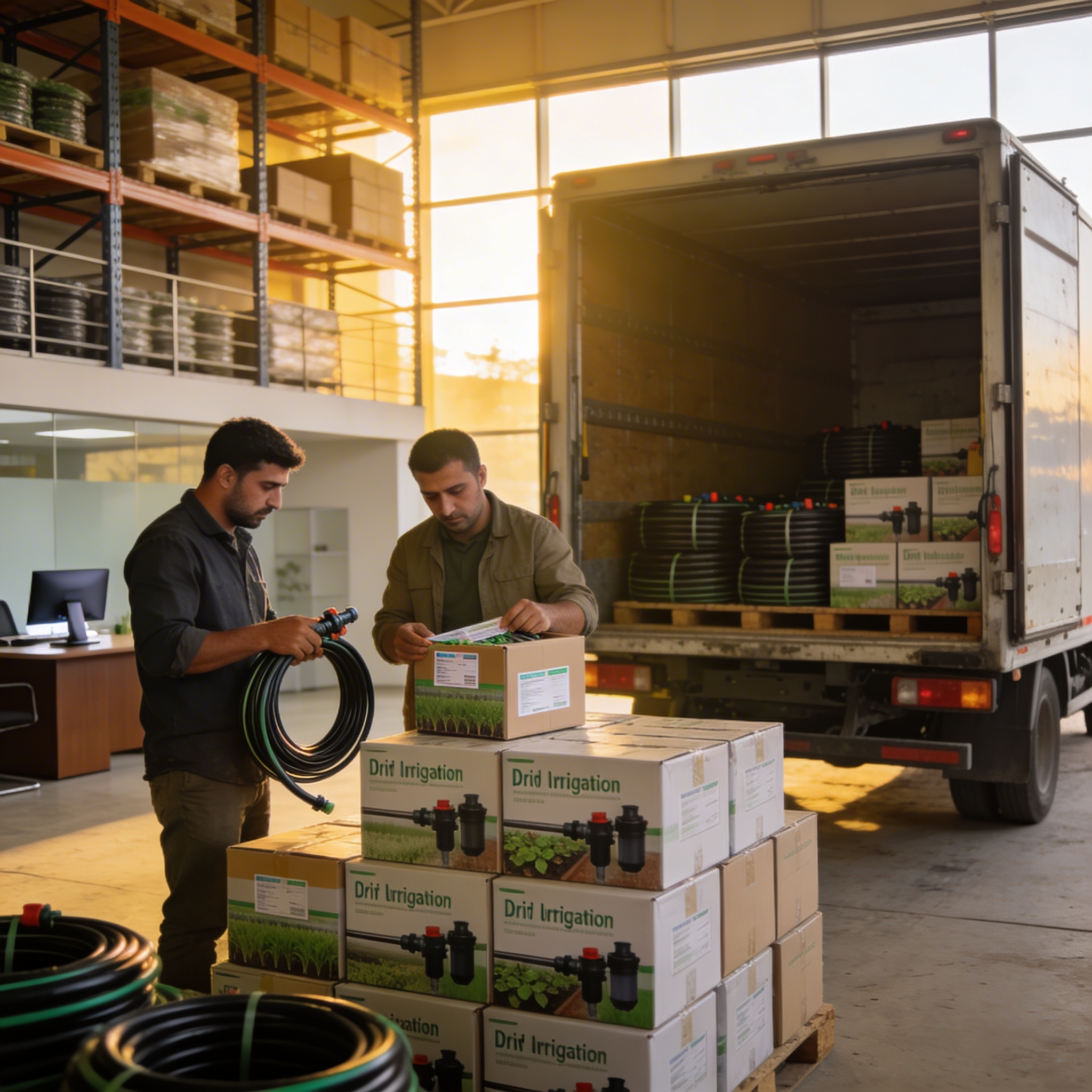
You will import complete drip irrigation kits, including pipes, drippers, and filters, and sell them directly to farm owners. Farmers pay because water is expensive and scarce, and flood irrigation wastes both money and crop potential.
Operator fit: This suits someone who is comfortable managing international phone calls and logistics to secure supply, and who isn't afraid to spend days.
Decision snapshot
Investment
AZN 6,950
Monthly profit
AZN 7,600
Payback
7 months
Customer type
B2B
Tech needed
Light tech
Sector
Agriculture
Quick Decision
Water costs are a major and growing expense for farms, making efficiency a direct way to protect profits.
Farm managers know drip irrigation is better but struggle to find a local supplier who provides a complete, reliable kit with all necessary parts.
If your supplier sends a container with missing or low-quality parts, you will lose the trust of your first customers and struggle to recover.
What You Are Selling
Import and sell complete, ready-to-install drip irrigation kits directly to commercial farms to help them cut water costs and boost yields.
Who this is for: Your ideal customer is a commercial farm or orchard owner with at least 5 hectares of irrigated land, who is personally feeling the pinch of high water costs or noticing uneven crop growth.
- Water costs are a major and growing expense for farms, making efficiency a direct way to protect profits.
- Farm managers know drip irrigation is better but struggle to find a local supplier who provides a complete, reliable kit with all necessary parts.
Financial Detail
| Item | Estimated cost |
|---|---|
| Initial inventory of drip irrigation kits | AZN 3,000 |
| Import duties, shipping, and customs clearance | AZN 1,150 |
| Business registration, permits, and legal fees | AZN 500 |
| Basic office equipment and storage setup | AZN 600 |
| Marketing materials and initial advertising | AZN 450 |
| Working capital for first month operations | AZN 1,250 |
| Month 1 | Month 2 | Month 3 | Month 4 | Month 5 | Month 6 | Month 7 | Month 8 | Month 9 | Month 10 | Month 11 | Month 12 | |
|---|---|---|---|---|---|---|---|---|---|---|---|---|
| Revenue | AZN 0 | AZN 0 | AZN 0 | AZN 4,500 | AZN 6,000 | AZN 7,500 | AZN 8,000 | AZN 8,500 | AZN 9,000 | AZN 9,000 | AZN 9,500 | AZN 9,500 |
| Costs | AZN 1,900 | AZN 1,900 | AZN 1,900 | AZN 1,900 | AZN 1,900 | AZN 1,900 | AZN 1,900 | AZN 1,900 | AZN 1,900 | AZN 1,900 | AZN 1,900 | AZN 1,900 |
| Net profit | -AZN 1,900 | -AZN 1,900 | -AZN 1,900 | AZN 2,600 | AZN 4,100 | AZN 5,600 | AZN 6,100 | AZN 6,600 | AZN 7,100 | AZN 7,100 | AZN 7,600 | AZN 7,600 |
| Investment recovery | AZN -8,850 | AZN -10,750 | AZN -12,650 | AZN -10,050 | AZN -5,950 | AZN -350 | AZN 5,750 | AZN 12,350 | AZN 19,450 | AZN 26,550 | AZN 34,150 | AZN 41,750 |
Net profit = monthly revenue minus operating costs. Investment recovery = estimated running cash position after deducting the full startup investment, calculated using monthly net profit midpoints. Turns positive when startup investment is fully recovered.
Figures are indicative midpoint estimates. Actual results depend on execution, location, and market conditions.
How This Business Wins
Price per hectare of complete kit coverage, with a minimum order for one starter block, to convert cautious farmers into long-term clients for field-wide expansion.
- Close your first paying client by offering the 'Demo Plot' kit for a small, defined area of their farm.
- Offer a 'First Block' kit for 0.5–1 hectare, including all components and basic installation guidance.
- Bundle the starter kit with a free site-visit consultation to design the layout and calculate water savings.
- Price the complete kit on a per-hectare basis, providing a clear total cost for the farmer's planned area.
- Require a minimum order covering at least 0.5 hectares to ensure viable order value and cover delivery costs.
- Offer a 70/30 payment split: 70% upon order confirmation to secure inventory, 30% upon delivery and satisfactory installation.
- Require a non-refundable 30% deposit with all orders to lock in supplier costs and mitigate currency risk.
- Clearly define kit scope in writing; charge separately for extra piping beyond standard layout distances or specialized filtration.
- Do not include ongoing maintenance or repair in the kit price; offer a separate annual service contract post-installation.
Customer and Buying Logic
Your ideal customer is a commercial farm or orchard owner with at least 5 hectares of irrigated land, who is personally feeling the pinch of high water costs or noticing uneven crop growth. They are practical, make their own purchasing decisions, and prefer to buy from a local person they can call directly if there's an issue.
- The Farm Owner: Cares about total cost, water savings, and yield improvement. Wants a simple, complete solution and a trustworthy supplier.
- The Farm Manager: Focused on operational hassle. Wants a kit that is easy for their workers to install and that won't break down mid-season.
- The Agri-Distributor Owner: Looks for a product with clear demand and good margin to resell to their own network of farm clients.
- A sharp increase in their water bill or a warning from local authorities about water usage limits.
- Seeing a neighboring farm achieve better, more even crop growth with a drip system.
- Frustration with the time and labor required to flood irrigate their fields repeatedly throughout the season.
Right now, farmers either continue with wasteful flood irrigation, or they try to piece together a drip system themselves by buying separate.
How You Get First Customers
- Visit regional agricultural supply markets and shops in cities like Ganja or Shirvan; talk to owners to learn which local farms are progressive and investing in their operations.
- Attend local agricultural fairs or extension service meetings; these are where farm owners gather and discuss common problems like water scarcity.
- Use your personal and extended family network to get introductions to farm owners in key fruit and vegetable growing regions.
This is a founder-led, direct sales motion.
- Direct farm visits: The most effective method. Drive to farms, ask for the owner or manager, and show them the physical kit and sample installation photos.
- WhatsApp outreach: After getting a contact, share short videos of the kit and a working installation. Use this for follow-up, not cold contact.
- Referrals from your first customers: A satisfied farm owner who shows their system to a neighbor is your most powerful salesperson.
- Start by asking about their current water costs and challenges with crop uniformity to establish the pain.
- Show the physical kit, unboxing components to demonstrate it's complete and of solid quality.
- Explain the simple installation process and calculate the potential water savings for their specific farm size.
What You Need To Start
- Use pre-orders from your network to fund the bulk of your first container purchase, reducing the cash you need upfront.
- Start with a single, most popular kit configuration to minimize inventory complexity and required storage space.
- Operate from a simple, affordable warehouse or even a secure garage space initially, avoiding expensive retail premises.
- Standard business registration as a local trading company.
- Understanding of basic customs clearance procedures for importing agricultural equipment.
- A reliable vehicle (owned or rented) for transporting samples and making farm visits.
- A smartphone with a good camera and WhatsApp for communication and sharing proof.
- Basic tools for assembling sample kits and demonstrating connections.
- Initially, no hires are required. The operator handles sourcing, sales, and logistics.
- The first hire, when needed, would be a driver/assistant for deliveries and helping with farm demonstrations.
- Comfort with basic negotiation and communication, both in local languages and potentially in simple English or Turkish for supplier emails/calls.
- Some experience in sales, agriculture, or logistics is valuable, but a determined, organized approach is the most critical requirement.
Risks
- If your supplier sends a container with missing or low-quality parts, you will lose the trust of your first customers and struggle to recover.
- Farmers are naturally cautious about new equipment; you may need to offer a small, paid trial plot or flexible payment terms to get the first sale.
- Exchange rate shifts between the manat and the supplier's currency can erase your profit margin if your sales price is not calculated to buffer this risk.
First 12 Months
- 1Contact 2-3 manufacturers in Turkey to get detailed specifications, request physical samples, and understand the full landed cost per kit in manat.
- 2Use those samples to conduct demonstrations for 5-10 farm owners in your personal network or nearby regions, aiming to secure pre-orders to finance your first container.
- 3Finalize the import order, manage customs clearance in Baku, and arrange simple, dry storage for your inventory, likely in a rented warehouse space.
- 4Deliver the pre-orders personally, then immediately visit other farms in areas like Goychay or Shamkir, using the first installations as live proof to book more sales.
Final Verdict
This is an attractive opportunity given the clear water-cost pain point and lack of trusted local suppliers for complete kits. The key risk is supplier reliability, where a single faulty shipment could stall the business.
This suits someone who is comfortable managing international phone calls and logistics to secure supply, and who isn't afraid to spend days driving to farms, shaking hands, and explaining the kit's benefits. You need to be organized enough to track inventory and payments, and credible enough that a farm owner will trust you to solve an important problem. A background in agriculture, sales, or import/export is very helpful, but persistence and practicality are more important.