Packaged Azerbaijani Mountain Herbal Tea for Export and Direct Sale
We sell packaged herbal tea blends made from wild Azerbaijani mountain plants to international wholesalers and wellness brands. Buyers pay for a unique, traceable origin story that differentiates their premium products from common Chinese-supplied herbs.
Operator fit: The operator should have basic experience in dealing with local suppliers or small-scale production.
Decision snapshot
Investment
AZN 54,500
Monthly profit
AZN 17,000
Payback
~13 months
Customer type
B2B and B2C
Tech needed
Light tech
Sector
Agriculture
Quick Decision
European wellness brands actively seek authentic, story-driven ingredients to differentiate their premium product lines.
Russian importers want consistent herbal supply not dependent on distant or volatile supply chains.
Wild plant harvests are entirely dependent on weather and season; a bad season can drastically reduce available supply.
What You Are Selling
Produce and sell distinctive herbal tea blends from wild Azerbaijani plants to international wholesalers and online consumers.
Who this is for: Tea and spice wholesalers in Russia and the Gulf seeking consistent, non-Chinese herbal supply.
- European wellness brands actively seek authentic, story-driven ingredients to differentiate their premium product lines.
- Russian importers want consistent herbal supply not dependent on distant or volatile supply chains.
Financial Detail
| Item | Estimated cost |
|---|---|
| Tea processing and packaging equipment | AZN 20,000 |
| Initial raw herb inventory and sourcing | AZN 10,000 |
| Business registration, export permits, certifications | AZN 4,000 |
| Branding, packaging design, and initial material stock | AZN 5,500 |
| Working capital for first 3 months operational costs | AZN 15,000 |
| Month 1 | Month 2 | Month 3 | Month 4 | Month 5 | Month 6 | Month 7 | Month 8 | Month 9 | Month 10 | Month 11 | Month 12 | |
|---|---|---|---|---|---|---|---|---|---|---|---|---|
| Revenue | AZN 0 | AZN 0 | AZN 0 | AZN 0 | AZN 4,000 | AZN 10,000 | AZN 16,000 | AZN 20,000 | AZN 22,000 | AZN 24,000 | AZN 24,000 | AZN 25,000 |
| Costs | AZN 8,000 | AZN 8,000 | AZN 8,000 | AZN 8,000 | AZN 8,000 | AZN 8,000 | AZN 8,000 | AZN 8,000 | AZN 8,000 | AZN 8,000 | AZN 8,000 | AZN 8,000 |
| Net profit | -AZN 8,000 | -AZN 8,000 | -AZN 8,000 | -AZN 8,000 | -AZN 4,000 | AZN 2,000 | AZN 8,000 | AZN 12,000 | AZN 14,000 | AZN 16,000 | AZN 16,000 | AZN 17,000 |
| Investment recovery | AZN -62,500 | AZN -70,500 | AZN -78,500 | AZN -86,500 | AZN -90,500 | AZN -88,500 | AZN -80,500 | AZN -68,500 | AZN -54,500 | AZN -38,500 | AZN -22,500 | AZN -5,500 |
Net profit = monthly revenue minus operating costs. Investment recovery = estimated running cash position after deducting the full startup investment, calculated using monthly net profit midpoints. Turns positive when startup investment is fully recovered.
Figures are indicative midpoint estimates. Actual results depend on execution, location, and market conditions.
How This Business Wins
Charge per kilogram for export contracts with a deposit to secure seasonal harvest, while retail sales use per-box pricing online.
- Close a first paid wholesale order for 25 kg with one Russian buyer, using a 50% deposit to cover your production costs.
- First contract: 500kg of a single standard blend (e.g., Mountain Sage & Mint) at a 10% introductory discount.
- Starter scope includes basic origin documentation and standard 50g foil packaging, no custom branding.
- Price export contracts per kilogram of finished packaged tea, with a 500kg minimum order quantity.
- Charge a 30% production deposit upon contract signing to secure the wild-harvested raw material.
- Set retail prices per 100g box for direct online sales, with discounts for multi-box orders.
- Require a deposit before harvest begins; this covers raw material procurement and is non-refundable for cancellations.
- Define 'standard blends' clearly; custom recipe development or branding is a separate, pre-paid service.
- Charge extra for expedited shipping or complex phytosanitary certification beyond the standard EU/Russian process.
Customer and Buying Logic
Tea and spice wholesalers in Russia and the Gulf seeking consistent, non-Chinese herbal supply. Wellness product importers in Europe needing authentic, traceable ingredients with a compelling regional story for their premium lines.
- Procurement Manager at a Russian tea wholesaler: cares about consistent quality, reliable delivery schedules, and competitive bulk pricing.
- Product Developer at a German wellness brand: cares about authentic sourcing stories, documentation for marketing, and unique flavor profiles for new blends.
- Health-conscious consumer in Germany: shops on Amazon or Etsy for artisan foods, cares about natural ingredients, origin transparency, and attractive packaging.
- Your offer provides specific origin documentation and photos that buyers can use directly in their marketing.
- You offer a smaller, more responsive supply chain compared to large, impersonal commercial suppliers.
- Your wild-sourced plants provide a noticeably different, more complex flavor that appeals to premium product developers.
Buyers currently source similar herbal teas from large-scale commercial farms in Turkey, Georgia, or China, which lack a specific mountain origin.
We win by selling the story of the Azerbaijani mountains as much as the tea itself, providing buyers with a marketable difference they cannot get.
How You Get First Customers
- Contact Russian tea wholesalers in Moscow and St. Petersburg directly by phone and WhatsApp, using harvested region samples as the initial hook.
- Identify wellness product importers in Germany and Austria through European specialty food trade shows and online B2B platforms focused on natural ingredients.
- Reach specialty food distributors in the United Arab Emirates via regional food and hospitality trade directories to pitch consistent, non-Chinese supply.
The operator leads sales by first sending a small physical sample with a one-page origin story via courier, then following up directly by phone or WhatsApp to discuss terms, avoiding lengthy email-only negotiations.
- Direct outreach to Russian wholesalers via phone/WhatsApp using sample batches and origin documentation as the lead tool.
- European specialty food and ingredient trade shows to meet wellness brand importers and distributors in person.
- Targeted LinkedIn and email campaigns to Polish herbal tea brands and German/Austrian importers, focused on traceability and unique regional flavors.
- Open with the unique story of the specific mountain region and wild plants.
- Immediately present the physical sample and highlight its distinct aroma and flavor.
- Explain the simple, traceable supply chain from harvester to package.
What You Need To Start
- Start with a small processing space; avoid expensive long-term leases until you have confirmed orders.
- Use harvesters who agree to payment upon your own sale, delaying some raw material costs.
- Package initial samples and small orders manually to avoid large upfront packaging machinery costs.
- Basic business registration for food product manufacturing and sales.
- Export license and familiarity with procedures for obtaining phytosanitary certificates for each shipment.
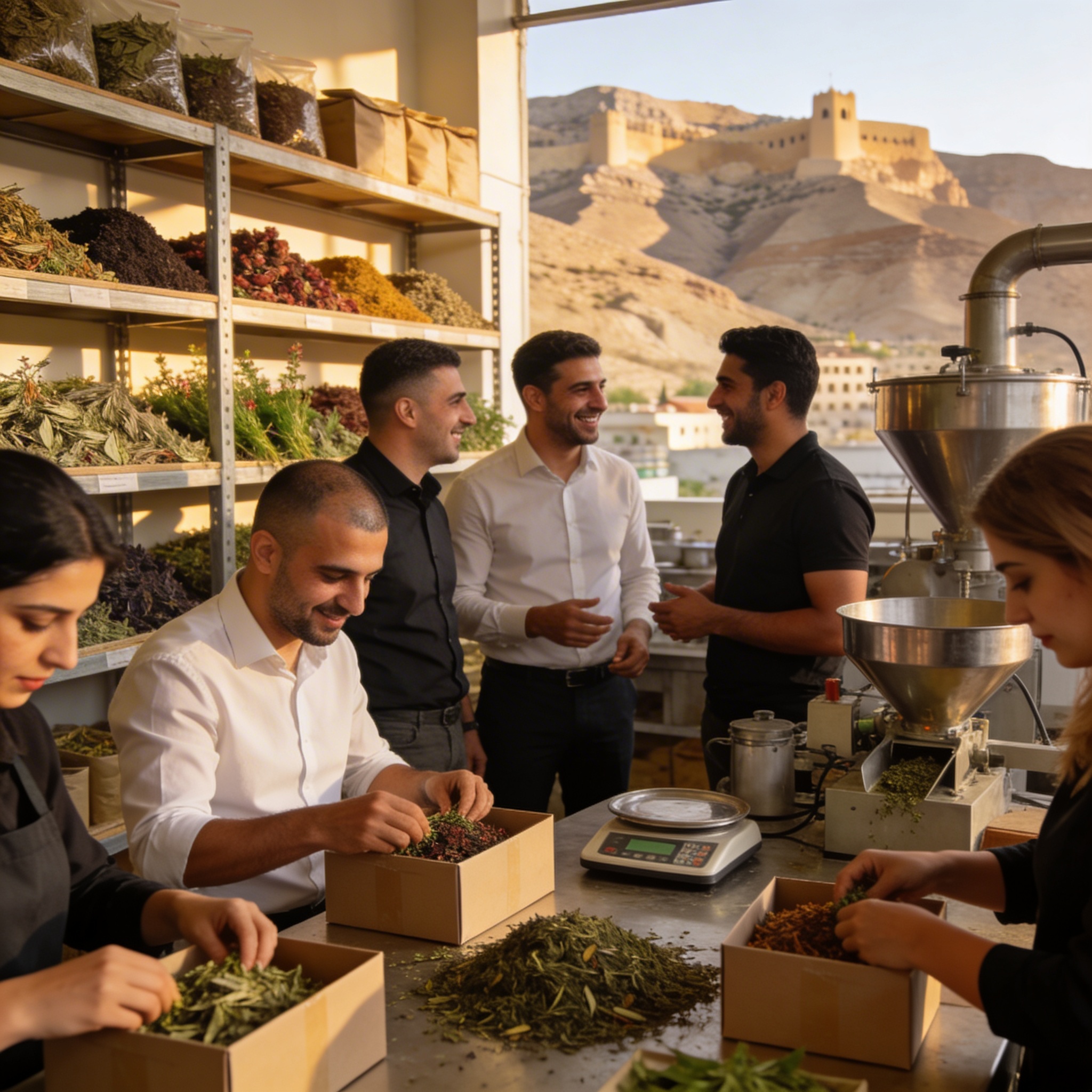
- Clean, dry space with good air circulation for drying plants.
- Basic scales, blending bins, and heat-sealing equipment for packaging.
- One assistant for processing, blending, and packaging operations.
- A local harvester coordinator to manage quality and timing in the mountain regions.
- Some experience in small-scale production, trading, or export procedures is necessary.
- Ability to communicate clearly in Russian or English for dealing with international buyers is highly important.
Risks
- Wild plant harvests are entirely dependent on weather and season; a bad season can drastically reduce available supply.
- Export procedures for food products, including phytosanitary certificates, are complex and can delay shipments for weeks.
- Established herbal exporters from Turkey and Georgia compete directly and may undercut on price for bulk orders.
First 12 Months
- 1Secure agreements with 2-3 experienced local harvesters in a mountain region for seasonal supply of specific plants.
- 2Set up a basic, clean processing space in a city like Baku for drying, blending, and packaging that meets basic food-handling standards.
- 3Create three standard blend recipes, produce small sample batches, and prepare simple documentation on origin and handling.
- 4Launch two parallel efforts: direct phone and WhatsApp outreach to Russian tea wholesalers with samples, and a simple online store or Amazon/Etsy listing for direct consumer sales.
Final Verdict
This is a viable business for an operator with local connections and patience for export logistics. The key condition for success is securing reliable, quality-conscious harvesters.
The operator should have basic experience in dealing with local suppliers or small-scale production. They need patience for seasonal cycles and the persistence to handle export paperwork. Some familiarity with either wholesale trading or simple e-commerce is helpful, but the most important trait is the ability to build trust with both local harvesters and distant buyers.