Reliable Beehive Equipment Supply for Azerbaijani Apiaries
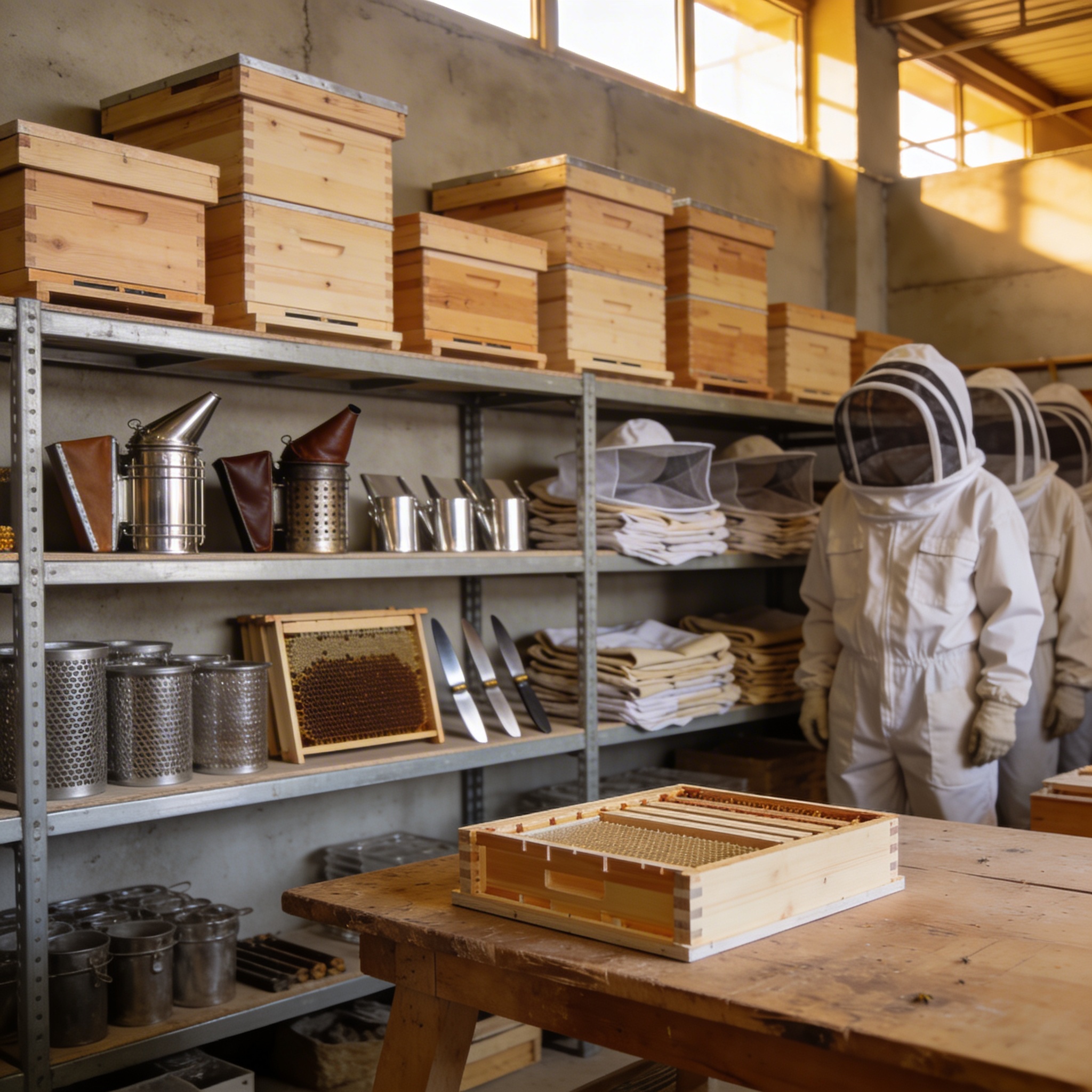
We import core beekeeping equipment—hive bodies, frames, smokers, and protective suits—from established manufacturers and sell them to apiaries. Beekeepers pay because their current homemade or worn-out gear directly reduces honey yield and makes their work more difficult and risky.
Operator fit: This suits someone who is comfortable managing international supplier relationships and payments.
Decision snapshot
Investment
AZN 9,700
Monthly profit
AZN 7,600
Payback
7 months
Customer type
B2B
Tech needed
Light tech
Sector
Agriculture
Quick Decision
Local beekeepers often use improvised wooden boxes that don't fit standard frames, complicating hive management.
Protective suits available locally are frequently low-quality, tearing easily and putting beekeepers at risk of stings.
Your entire cash can be tied up in a shipping container if you misjudge the mix of items beekeepers actually want to buy.
What You Are Selling
Import and supply standardized beehive boxes, tools, and protective gear directly to commercial and expanding beekeepers across Azerbaijan.
Who this is for: Your ideal customer is a semi-professional or commercial beekeeper managing 30 to 150 hives, who understands that poor equipment costs them honey and time.
- Local beekeepers often use improvised wooden boxes that don't fit standard frames, complicating hive management.
- Protective suits available locally are frequently low-quality, tearing easily and putting beekeepers at risk of stings.
Financial Detail
| Item | Estimated cost |
|---|---|
| Initial inventory purchase | AZN 3,000 |
| Import duties and customs clearance | AZN 1,150 |
| Business registration and permits | AZN 450 |
| Storage facility deposit and setup | AZN 900 |
| Marketing and initial customer outreach | AZN 600 |
| Working capital for first 3 months | AZN 3,600 |
| Month 1 | Month 2 | Month 3 | Month 4 | Month 5 | Month 6 | Month 7 | Month 8 | Month 9 | Month 10 | Month 11 | Month 12 | |
|---|---|---|---|---|---|---|---|---|---|---|---|---|
| Revenue | AZN 0 | AZN 0 | AZN 0 | AZN 4,500 | AZN 6,000 | AZN 7,500 | AZN 8,500 | AZN 9,000 | AZN 9,500 | AZN 9,500 | AZN 9,500 | AZN 9,500 |
| Costs | AZN 1,900 | AZN 1,900 | AZN 1,900 | AZN 1,900 | AZN 1,900 | AZN 1,900 | AZN 1,900 | AZN 1,900 | AZN 1,900 | AZN 1,900 | AZN 1,900 | AZN 1,900 |
| Net profit | -AZN 1,900 | -AZN 1,900 | -AZN 1,900 | AZN 2,600 | AZN 4,100 | AZN 5,600 | AZN 6,600 | AZN 7,100 | AZN 7,600 | AZN 7,600 | AZN 7,600 | AZN 7,600 |
| Investment recovery | AZN -11,600 | AZN -13,500 | AZN -15,400 | AZN -12,800 | AZN -8,700 | AZN -3,100 | AZN 3,500 | AZN 10,600 | AZN 18,200 | AZN 25,800 | AZN 33,400 | AZN 41,000 |
Net profit = monthly revenue minus operating costs. Investment recovery = estimated running cash position after deducting the full startup investment, calculated using monthly net profit midpoints. Turns positive when startup investment is fully recovered.
Figures are indicative midpoint estimates. Actual results depend on execution, location, and market conditions.
How This Business Wins
Price each item at a fixed manat markup over your landed cost, with discounts only for clear bulk purchases of identical items.
- Your first sale is a bounded delivery of 3-5 complete hives to a known, respected beekeeper in your network.
- New Beekeeper Kit: 5 hives with frames, a suit, a smoker, and a tool for a single bundled price, delivered.
- Frame Refill Pack: 100 frames with foundation at a per-frame price lower than buying 10 individually.
- Set your manat price by taking your item cost in USD, adding freight and customs, converting at a conservative exchange rate, and adding your margin.
- Sell individual items (suits, tools) at a higher margin percentage than bulk hive bodies and frames.
- Offer a 5% discount for cash payment on orders over a certain amount, like 5000 AZN, to improve cash flow.
- Never discount your first quote by more than 10%; if the customer pushes harder, offer to include delivery instead.
- Clearly state that prices are valid for 14 days due to exchange rate volatility, especially for large orders.
- For custom requests, require a 50% deposit before you even place the order with your supplier.
Customer and Buying Logic
Your ideal customer is a semi-professional or commercial beekeeper managing 30 to 150 hives, who understands that poor equipment costs them honey and time. They are actively looking to replace worn gear or standardize their operation, have cash from honey sales, and are located within a day's drive of your storage point for easy pickup or delivery.
- The Apiary Manager: Cares about durability, exact frame dimensions for compatibility, and bulk pricing for 50+ hive bodies.
- The Expanding Hobbyist: Wants a complete, trustworthy starter kit with clear instructions and after-sales support for questions.
- The Regional Agri-Dealer: Looks for reliable supply, consistent margin, and items that sell quickly without needing technical support from them.
- Their homemade hive warps, causing frames to stick and damaging comb during harvest.
- A low-quality suit tears during an inspection, resulting in multiple stings and lost work time.
- They expand their apiary and need 20 identical new hives fast, which a local carpenter cannot deliver.
Today, beekeepers either build their own boxes from scrap wood, which are often inconsistent, or buy from a scattered network of local carpenters.
You win by having the right essential items in stock when the beekeeper needs them, with the consistent quality that lets them work faster.
How You Get First Customers
- Identify commercial apiaries in honey-producing regions like Guba, Ismayilli, and Shamakhi through local agricultural extension offices or honey cooperative listings.
- Contact semi-professional beekeepers expanding operations via regional beekeeping associations and attend their seasonal meetings to introduce equipment.
- Directly approach agricultural supply shops in target regions to act as wholesale distributors, leveraging their existing customer networks.
You, as the owner, will drive sales by physically visiting target regions, showing samples from your car trunk, and closing deals on the spot for delivery from your storage.
- Direct phone and WhatsApp outreach to beekeepers whose contacts you gather at markets, followed by an offer to visit their apiary with samples.
- Supplying 2-3 respected local agricultural shops on a wholesale basis, letting them handle the final retail sale in their community.
- Word-of-mouth referrals triggered by giving a satisfied customer two extra frames for every new customer they send who makes a purchase.
- Start by asking about their current hives: 'Are you using standard dimensions, or is each box a bit different?'
- Show your hive body and frame, demonstrating the precise fit and thicker wood compared to typical local options.
- Let them feel the fabric of the suit and see the reinforced stitching, explaining how many stings it's rated to withstand.
What You Need To Start
- Capex discipline: Import container loads only against confirmed pre-orders covering at least 60% of the shipment cost to minimize inventory cash outlay.
- Working capital discipline: Negotiate net-60 terms with manufacturers while requiring 50% deposits from customers on large orders to fund inventory cycles.
- Utilization discipline: Implement a just-in-time inventory system using a central warehouse in Baku and regional drop points to avoid dead stock and reduce storage costs.
- Standard commercial business registration for import and wholesale trade.
- Tax registration and understanding of VAT procedures for imported goods.
- A reliable vehicle (van or pickup) for transporting samples and making deliveries.
- A secure, dry storage lock-up or warehouse space, preferably with ground-floor access for loading.
- A family member or trusted person to manage the storage yard and handle loading when you are away on sales visits.
- A part-time assistant with good phone skills for following up on leads and coordinating delivery schedules via WhatsApp.
- Some experience in buying and selling physical goods, preferably with exposure to import procedures or agricultural products.
- Comfort with basic logistics, driving to rural areas, and building trust through direct, face-to-face communication.
Risks
- Your entire cash can be tied up in a shipping container if you misjudge the mix of items beekeepers actually want to buy.
- Beekeepers are often skeptical of new suppliers and may need to see your gear in person or get a referral before buying.
- A sudden devaluation of the manat against your supplier's currency can erase your profit margin on an already-paid order.
First 12 Months
- 1Finalize supplier agreements with two manufacturers in Turkey, focusing on the 8 most-ordered items to keep initial inventory simple.
- 2Import your first mixed container, allocating 70% of space to hive bodies/frames and 30% to suits and tools, based on common demand.
- 3Rent a secure, accessible storage space in a central region like Goychay or Ismayilli to serve multiple beekeeping districts.
- 4Visit 5 local honey markets and 3 agricultural supply shops in your first month to introduce your gear and collect direct phone numbers from beekeepers.
Final Verdict
This is an attractive opportunity if you can secure reliable suppliers and manage currency risk. The key risk is building initial trust with cautious beekeepers, which may delay cash flow.
This suits someone who is comfortable managing international supplier relationships and payments. You need the discipline to not over-order fancy items and to focus on reliable, fast-moving stock. Being able to travel to beekeeping regions, build trust face-to-face, and handle logistics like customs clearance is more important than a technical beekeeping background.