Aquaculture Aeration and Pumping Spare Parts Supply with Field Service
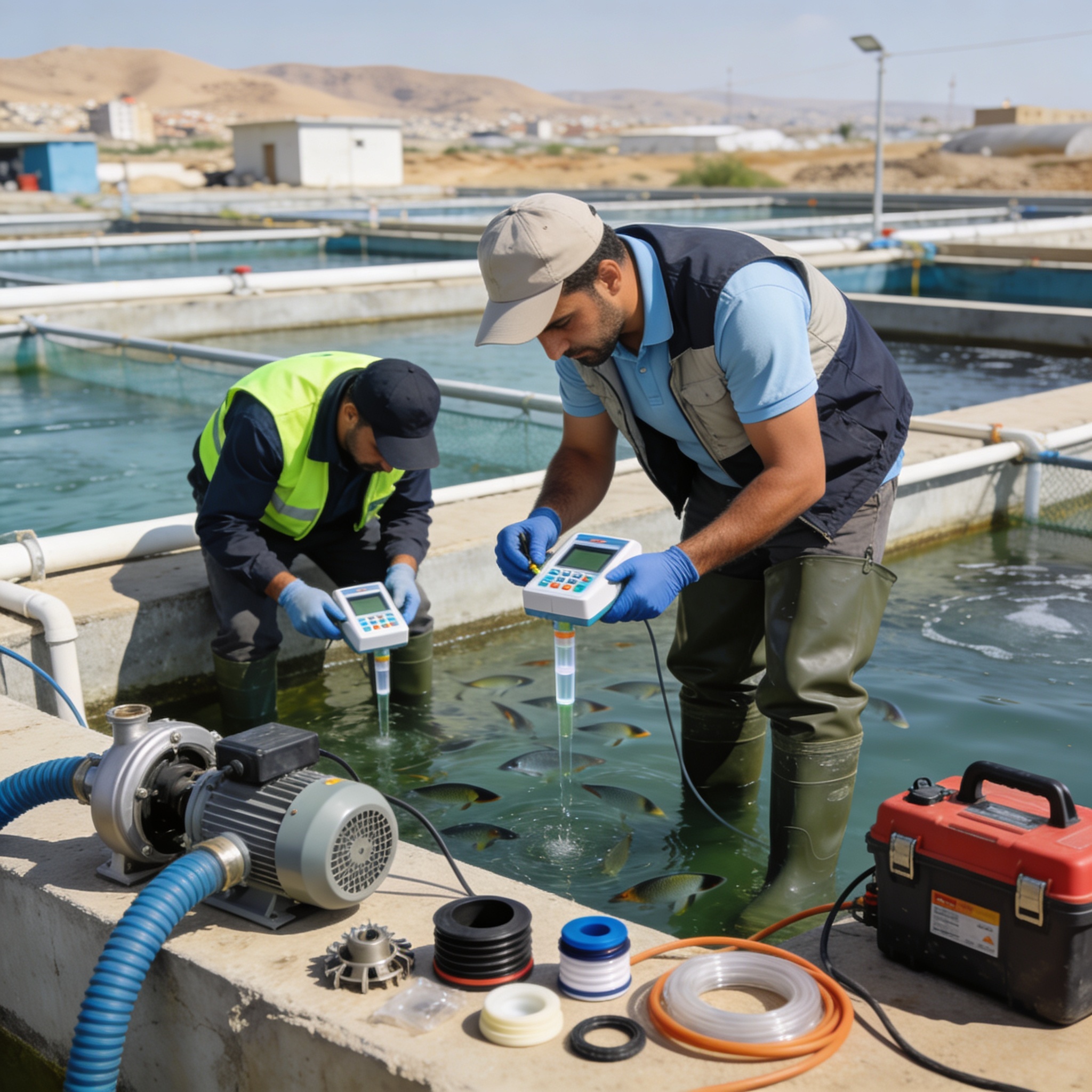
We sell imported spare parts like blowers, impellers, seals, and hoses, plus on-call field service, for the pumps and aerators used in fish farms. Buyers pay because equipment failure stops water flow and oxygen, which can kill fish within hours, and waiting for parts from abroad takes weeks.
Operator fit: This suits someone with basic mechanical skills, who is comfortable taking apart pumps and motors to identify failed components.
Decision snapshot
Investment
AZN 101,000
Monthly profit
AZN 10,500
Payback
~16 months
Customer type
B2B
Tech needed
Low
Sector
Import
Quick Decision
Imported equipment breaks down, but original manufacturer parts take too long to arrive by sea and air freight.
Local technical knowledge for troubleshooting complex aeration systems is scarce, leaving farms vulnerable during failures.
If you misjudge which parts are most common, you can tie up most of your capital in inventory that sells slowly.
What You Are Selling
A local supply and service business providing critical spare parts and on-site troubleshooting for fish farm aeration and water circulation systems.
Who this is for: The ideal customer is a fish farm with at least 5-10 tanks or ponds, using mechanical aeration and circulation pumps.
- Imported equipment breaks down, but original manufacturer parts take too long to arrive by sea and air freight.
- Local technical knowledge for troubleshooting complex aeration systems is scarce, leaving farms vulnerable during failures.
Financial Detail
| Item | Estimated cost |
|---|---|
| Initial inventory of spare parts | AZN 40,000 |
| Warehouse setup and storage equipment | AZN 17,500 |
| Service vehicle and field tools | AZN 20,000 |
| Business registration, permits, licenses | AZN 4,000 |
| Initial marketing and client acquisition | AZN 9,000 |
| Working capital for 3 months operations | AZN 10,500 |
| Month 1 | Month 2 | Month 3 | Month 4 | Month 5 | Month 6 | Month 7 | Month 8 | Month 9 | Month 10 | Month 11 | Month 12 | |
|---|---|---|---|---|---|---|---|---|---|---|---|---|
| Revenue | AZN 0 | AZN 0 | AZN 0 | AZN 7,200 | AZN 9,500 | AZN 11,800 | AZN 12,500 | AZN 13,200 | AZN 13,900 | AZN 14,200 | AZN 14,200 | AZN 14,200 |
| Costs | AZN 3,700 | AZN 3,700 | AZN 3,700 | AZN 3,700 | AZN 3,700 | AZN 3,700 | AZN 3,700 | AZN 3,700 | AZN 3,700 | AZN 3,700 | AZN 3,700 | AZN 3,700 |
| Net profit | -AZN 3,700 | -AZN 3,700 | -AZN 3,700 | AZN 3,500 | AZN 5,800 | AZN 8,100 | AZN 8,800 | AZN 9,500 | AZN 10,200 | AZN 10,500 | AZN 10,500 | AZN 10,500 |
| Investment recovery | AZN -104,700 | AZN -108,400 | AZN -112,100 | AZN -108,600 | AZN -102,800 | AZN -94,700 | AZN -85,900 | AZN -76,400 | AZN -66,200 | AZN -55,700 | AZN -45,200 | AZN -34,700 |
Net profit = monthly revenue minus operating costs. Investment recovery = estimated running cash position after deducting the full startup investment, calculated using monthly net profit midpoints. Turns positive when startup investment is fully recovered.
Figures are indicative midpoint estimates. Actual results depend on execution, location, and market conditions.
How This Business Wins
We monetize through spare part sales at a fixed markup and a daily field service rate, securing contracts by guaranteeing rapid response to prevent catastrophic fish losses from aeration or pump failure.
- Close the first client by offering to stock and deliver one specific, high-need part (like a blower diaphragm) for their farm at a small discount, with the condition that they call you first for the next service issue, which you will charge at your standard daily rate.
- First-response package: one emergency service call with diagnosis and one critical spare part (e.g., impeller or seal kit) installed, at a fixed introductory price.
- Starter inventory consignment: place a curated set of 10-15 most-failed parts at a farm's site with no upfront cost, billed only upon use for the first 90 days.
- Price spare parts per unit (e.g., impeller, seal kit, blower motor) with a standard 40-60% markup over landed import cost.
- Charge field service as a fixed daily rate plus travel, with a 4-hour minimum for emergency calls.
- Establish a minimum annual contract value for priority clients, combining a parts retainer with discounted service day rates.
- Require a 50% deposit on any non-stock part orders before initiating international purchase to avoid dead inventory.
- Define service scope clearly: travel and labor are billed separately; parts replacement outside the initial diagnosis is a change order with signed approval.
- Apply a fuel and per-diem surcharge for service calls beyond a 150km radius from the central depot in Lankaran or Neftchala.
Customer and Buying Logic
The ideal customer is a fish farm with at least 5-10 tanks or ponds, using mechanical aeration and circulation pumps. They have experienced a breakdown in the last year that cost them fish or significant downtime, and the manager is personally frustrated with the wait for international parts or service.
- Farm Owner: Cares about minimizing fish loss and avoiding total system failure that risks the entire stock.
- Production Manager: Focused on keeping daily operations running smoothly and hitting harvest targets on schedule.
- Maintenance Technician: Wants reliable parts that fit correctly and clear guidance on installation to fix problems quickly.
- An aerator blower fails on a Friday, and the farm cannot source a replacement for two weeks, threatening the entire pond.
- A generic seal purchased from a local automotive shop fails after two days, causing another pump breakdown.
- The farm is preparing for a seasonal harvest and cannot risk a circulation pump failure during the critical final growth stage.
Today, farm managers either order spare parts directly from the original equipment manufacturer abroad, which involves long shipping delays and high.
We win by being the only local source that combines the correct spare parts with the practical knowledge to install them on-site, turning a.
How You Get First Customers
- Identify active fish farms in Neftchala and Lankaran through local aquaculture extension networks to get direct introductions to facility managers.
- Contact farm owners directly via phone to discuss their current aeration and pumping systems and schedule on-site assessments of spare part needs.
- Visit hatcheries and intensive tank-based operations to inspect blowers, pumps, and filtration skids, building a list of critical components for immediate inventory.
The founder must personally visit farms, inspect their equipment sheds, identify a few vulnerable parts, and then follow up with a phone call a week later to propose keeping those specific parts in local stock for them.
- Direct, in-person visits to farms during working hours to introduce the service.
- Phone calls followed by WhatsApp messages with photos of common parts you stock.
- Asking for referrals from your first three satisfied clients, offering them a credit on future parts.
- Start by asking about their last equipment breakdown: how long did it take to fix and what did it cost them?
- Show photos of the exact blower, pump, or valve models you know are common in the region.
- Explain your 48-hour response guarantee for emergencies with a qualified technician.
What You Need To Start
- Start by stocking only the 15-20 most common part numbers, not the full catalog.
- Use a personal vehicle for the first service calls instead of buying a dedicated service van.
- Negotiate payment terms with your parts supplier to delay outlay until you have a confirmed sale.
- Business registration for wholesale trade and service activities.
- Import license for commercial goods to bring in spare parts.
- Basic tool set for mechanical disassembly and assembly (wrenches, screwdrivers, seal pullers).
- Reliable vehicle suitable for rural roads to carry parts and tools to farm sites.
- A driver/assistant who can help with deliveries and learn basic part identification.
- A part-time bookkeeper to handle invoices, customs paperwork, and supplier payments.
- Practical experience diagnosing and repairing pumps, motors, or mechanical systems.
- Existing relationships with local business owners or farmers, or the confidence to build them quickly.
Risks
- If you misjudge which parts are most common, you can tie up most of your capital in inventory that sells slowly.
- Farm managers may be hesitant to trust a new, unproven local supplier over their existing, though slow, international contacts.
- Winter road conditions in rural areas could delay emergency service calls, damaging your reliability promise.
First 12 Months
- 1Visit 10-15 active fish farms in the Neftchala and Lankaran regions to inspect their equipment and build a list of the most commonly needed parts.
- 2Use the inspection list to place a first, focused inventory order for the top 20 part numbers, avoiding slow-moving specialty items.
- 3Offer a first service package: a guaranteed 48-hour response for emergency calls, paired with a small discount on the first part purchase.
- 4After the first three successful repair jobs, ask those farm managers for introductions to other farms in their network to build the client list.
Final Verdict
This is an attractive opportunity with a clear wedge: providing immediate local access to critical spare parts and emergency field service to prevent catastrophic fish losses. The key risk is misjudging the installed base of equipment, which could lead to dead inventory and locked working capital.
This suits someone with basic mechanical skills, who is comfortable taking apart pumps and motors to identify failed components. The operator needs patience to build trust with farm managers and must be willing to drive to remote locations for service calls. A background in equipment maintenance, automotive repair, or wholesale parts supply is ideal.