Reliable Refrigerated Transport for Azerbaijan's Agricultural Exporters
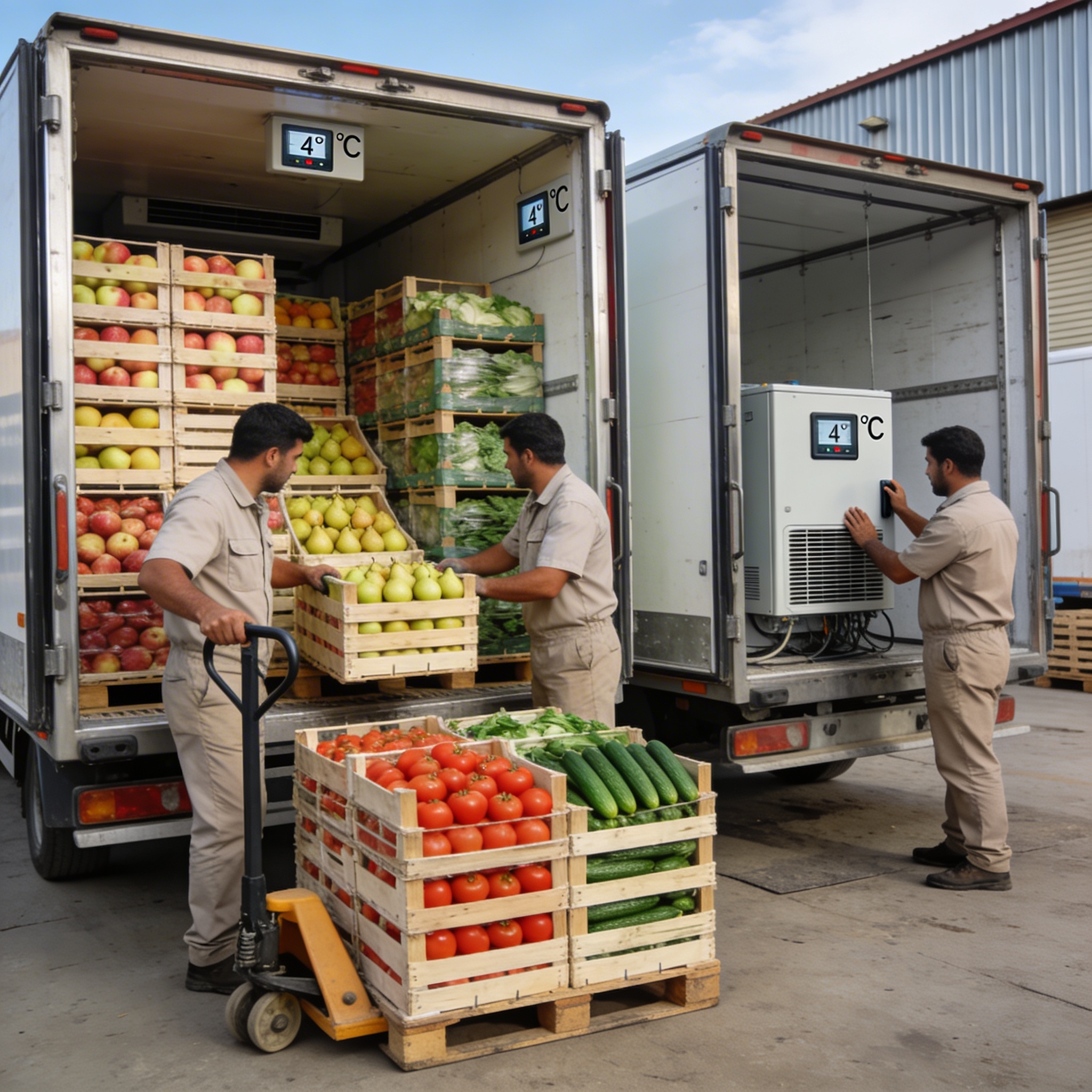
We provide refrigerated trucking services specifically for temperature-sensitive agricultural exports like pomegranates, tomatoes, and berries. Exporters pay because a single trip with poor temperature control can ruin an entire shipment worth thousands, damaging relationships with international buyers.
Operator fit: This suits someone with practical logistics or vehicle management experience, who understands maintenance schedules and can build trust through.
Decision snapshot
Investment
AZN 31,900
Monthly profit
AZN 12,000
Payback
11 months
Customer type
B2B
Tech needed
Light tech
Sector
Logistics transport
Quick Decision
Many local exporters use old trucks where the refrigeration often fails mid-journey, or they pay premium rates for last-minute rentals from Baku.
Buyers in Russia, Georgia, and the Gulf now require temperature logs and proof of consistent cooling throughout transit to ensure product shelf life.
A major repair on the truck's refrigeration unit could cost several thousand and stop operations for days during a critical harvest window.
What You Are Selling
Operate a small fleet of refrigerated trucks to transport fresh fruits and vegetables from farms to export points, preventing spoilage for local producers.
Who this is for: Medium-sized fruit and vegetable export companies or packing houses in Azerbaijan that ship fresh produce to international markets.
- Many local exporters use old trucks where the refrigeration often fails mid-journey, or they pay premium rates for last-minute rentals from Baku.
- Buyers in Russia, Georgia, and the Gulf now require temperature logs and proof of consistent cooling throughout transit to ensure product shelf life.
Financial Detail
| Item | Estimated cost |
|---|---|
| Refrigerated truck purchase | AZN 20,000 |
| Business registration and permits | AZN 2,250 |
| Initial maintenance and spare parts | AZN 3,000 |
| Insurance and licensing fees | AZN 2,650 |
| Working capital for fuel and operations | AZN 4,000 |
| Month 1 | Month 2 | Month 3 | Month 4 | Month 5 | Month 6 | Month 7 | Month 8 | Month 9 | Month 10 | Month 11 | Month 12 | |
|---|---|---|---|---|---|---|---|---|---|---|---|---|
| Revenue | AZN 0 | AZN 0 | AZN 0 | AZN 0 | AZN 8,000 | AZN 11,000 | AZN 13,000 | AZN 14,500 | AZN 15,500 | AZN 16,000 | AZN 16,500 | AZN 17,000 |
| Costs | AZN 5,000 | AZN 5,000 | AZN 5,000 | AZN 5,000 | AZN 5,000 | AZN 5,000 | AZN 5,000 | AZN 5,000 | AZN 5,000 | AZN 5,000 | AZN 5,000 | AZN 5,000 |
| Net profit | -AZN 5,000 | -AZN 5,000 | -AZN 5,000 | -AZN 5,000 | AZN 3,000 | AZN 6,000 | AZN 8,000 | AZN 9,500 | AZN 10,500 | AZN 11,000 | AZN 11,500 | AZN 12,000 |
| Investment recovery | AZN -36,900 | AZN -41,900 | AZN -46,900 | AZN -51,900 | AZN -48,900 | AZN -42,900 | AZN -34,900 | AZN -25,400 | AZN -14,900 | AZN -3,900 | AZN 7,600 | AZN 19,600 |
Net profit = monthly revenue minus operating costs. Investment recovery = estimated running cash position after deducting the full startup investment, calculated using monthly net profit midpoints. Turns positive when startup investment is fully recovered.
Figures are indicative midpoint estimates. Actual results depend on execution, location, and market conditions.
How This Business Wins
We price per refrigerated truck trip with a minimum contract scope to secure reliable revenue while protecting margins from unpredictable costs and scope creep.
- Close the first client by offering a single, discounted shipment for their most time-sensitive route.
- Introductory rate for first 3 trips with a new client to demonstrate reliability and documentation quality.
- Bounded to a single route (e.g., Lankaran packing house to Baku) to control initial operational complexity.
- Charge per completed trip, not per hour, to align with client shipment value and simplify billing.
- Base trip fee on distance zones (e.g., Guba to Baku port) plus a premium for deep-chill requirements for berries.
- Require a minimum of two trips per month or a seasonal block booking to ensure fleet utilization.
- Require a 30% deposit upon booking confirmation to secure the truck and schedule.
- Define clear out-of-scope charges for wait times exceeding 2 hours at loading points.
- Contractually limit liability to the transport fee, excluding cargo value, with insurance for refrigeration failure.
Customer and Buying Logic
Medium-sized fruit and vegetable export companies or packing houses in Azerbaijan that ship fresh produce to international markets. They face costly spoilage risks due to unreliable refrigerated transport and need guaranteed temperature control for specific export routes.
- Export Manager: Cares about on-time delivery to the port and accurate paperwork (like temperature logs) to satisfy their international buyers.
- Farm or Greenhouse Owner: Focuses on product quality upon arrival; needs assurance their delicate produce won't be damaged by heat during the 4-6 hour trip to Baku.
- Procurement Officer at a Processing Plant: Wants predictable scheduling and cost for regular runs from farm to factory, and needs the truck to be clean to meet food safety standards.
- Their usual truck breaks down right before a critical shipment, and they need a reliable replacement immediately.
- An international buyer rejects a shipment due to poor temperature documentation, forcing them to find a provider who can provide proper logs.
- They secure a new, larger export contract that requires more frequent and dependable transport than their current arrangement can support.
Most exporters currently use a patchwork solution: they own an aging refrigerated truck that breaks down frequently, or they call various general.
We win by guaranteeing reliability and transparency where others are inconsistent.
How You Get First Customers
- Direct visits to packing houses and export company offices in Baku's industrial zones during pre-harvest planning periods.
- Attend regional agricultural trade fairs and exhibitions where exporters source logistics partners.
- Build referrals through trusted farm suppliers in key growing regions like Guba-Gusar who can introduce you to their export buyers.
Source target accounts from regional trade directories and packing house listings.
- Direct, in-person visits to the offices of export companies in Baku, following up via WhatsApp.
- Asking for referrals from satisfied clients, offering a credit toward their next shipment for any introduction that converts to a paying customer.
- Building relationships with managers at regional packing houses, who can recommend your service to the exporters they work with.
- Start by asking about their biggest headache with current transport—listen for stories of breakdowns or rejected shipments.
- Show photos of your truck and explain your preventative maintenance schedule to address reliability concerns.
- Present a sample temperature log sheet, explaining how it provides proof of care for their international buyer.
What You Need To Start
- Capex discipline: Purchase 2-3 used, reliable refrigerated trucks from European markets instead of new models, focusing on brands with strong local service networks in Azerbaijan.
- Working capital discipline: Require a 50% deposit from exporters upon booking confirmation, with the balance due before cargo release at the destination port.
- Utilization discipline: Implement backhaul planning with local importers of packaged goods or pharmaceuticals to fill return trips from the port, avoiding empty runs.
- A commercial transportation license ('Daşınma lisenziyası') for freight vehicles.
- Vehicle registration and technical inspection ('Texniki baxış') specifically for a refrigerated truck.
- One reliable refrigerated truck (isothermal van with a functioning cooling unit).
- A smartphone or tablet for the driver to take photos of loading/unloading and to communicate.
- Basic tools and spare parts for the truck (tires, belts) to handle minor roadside issues.
- One experienced, reliable driver with a clean record who understands the importance of temperature control.
- A trusted, local mechanic or garage you have an agreement with for regular maintenance and emergency repairs.
- Some experience managing vehicles, drivers, or logistics—knowing how to schedule maintenance and track costs is essential.
- Strong local language skills and the patience to build business relationships through repeated in-person and phone contact.
Risks
- A major repair on the truck's refrigeration unit could cost several thousand and stop operations for days during a critical harvest window.
- Revenue will be lumpy—very busy during the pomegranate and tomato harvests (August-October), but slower in winter, requiring careful cash management.
- If a driver neglects to monitor the temperature or falsifies logs, and a shipment arrives warm, you will lose that client and damage your reputation with others.
First 12 Months
- 1Find and purchase one reliable, second-hand refrigerated truck, focusing on units with serviceable refrigeration systems and good maintenance records.
- 2Hire one driver with experience in perishable goods, train them on maintaining temperature logs and basic pre-trip refrigeration checks.
- 3Spend two weeks visiting packing houses and export company offices in Baku's Sabunchu district to introduce the service and understand specific route needs.
- 4Offer your first client a discounted rate for their initial shipment to Baku port, using that trip to refine your process and gather proof of reliable delivery.
Final Verdict
This is a viable, needed service in Azerbaijan's growing export sector, but it is a 'hands-on' operations business. The key condition for success is your ability to personally ensure mechanical reliability and driver accountability.
This suits someone with practical logistics or vehicle management experience, who understands maintenance schedules and can build trust through face-to-face relationships. You need to be comfortable managing drivers, negotiating with mechanics, and being available by phone to solve problems during transit. Patience is required, as building a client base relies on demonstrating reliability over several seasons.